
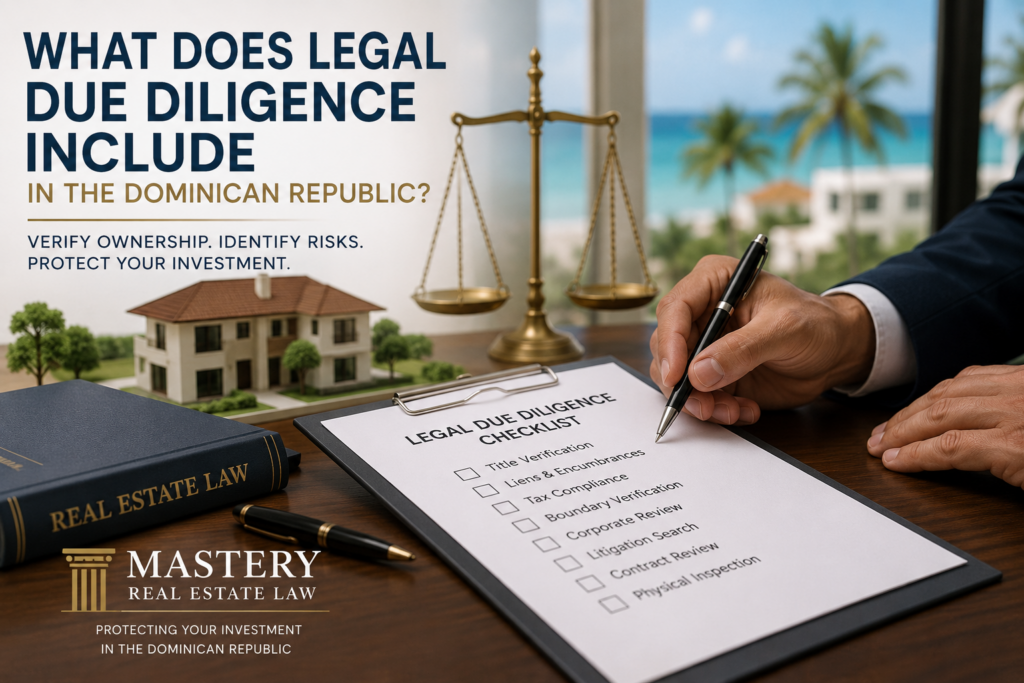
What Does Legal Due Diligence Include in the Dominican Republic?
Legal due diligence in the Dominican Republic is one of the most important steps when purchasing real estate. Whether you are buying a vacation home, investment property, commercial building, or development land, a thorough legal review helps identify risks before closing.
Many buyers mistakenly believe that obtaining a copy of the Certificate of Title is sufficient to protect their investment. However, under Dominican real estate practice, due diligence extends far beyond title verification and involves a comprehensive review of the property's legal, tax, corporate, and factual status.
At Mastery Real Estate Law, we assist local and international investors with legal due diligence, title verification, contract review, and real estate transactions throughout the Dominican Republic.
Why Is Legal Due Diligence Important?
The purpose of due diligence is to verify that:
- The seller has legal authority to sell.
- The property can be legally transferred.
- Ownership rights are valid.
- No hidden risks affect the transaction.
- The buyer understands all legal obligations before closing.
Proper due diligence allows buyers to make informed decisions and helps prevent costly disputes after the transaction has been completed.
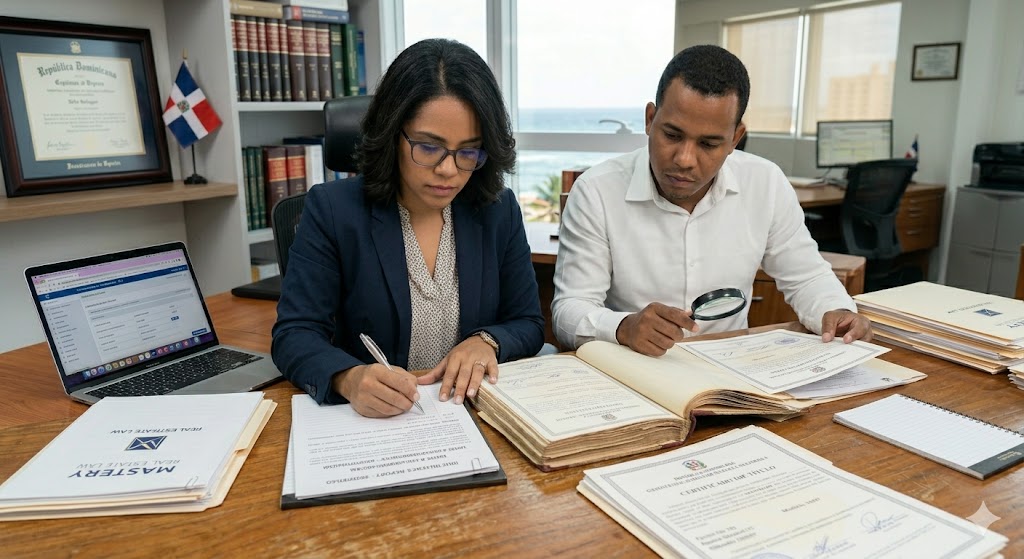
Legal Due Diligence Helps Buyers Identify Hidden Risks and Make Informed Real Estate Investment Decisions in the Dominican Republic.
Legal Framework Governing Real Estate Due Diligence
Real estate transactions in the Dominican Republic are primarily governed by:
- Law No. 108-05 on Real Estate Registration.
- The Dominican Civil Code.
- Law No. 479-08 on Commercial Companies, when corporate ownership is involved.
- Applicable tax regulations.
- Condominium regulations and special property laws, when applicable.
Because multiple legal systems may affect a property, a complete review is essential before proceeding with a purchase.
1. Title Verification
One of the first steps in the due diligence process is verifying the property's Certificate of Title.
Learn more in our guide "Understanding Certificates of Title in the Dominican Republic."
This review typically includes:
- Confirmation of ownership.
- Verification of property identification.
- Review of registration information.
- Confirmation of legal transferability.
Under Law No. 108-05 on Real Estate Registration, ownership rights over registered real estate are evidenced through a valid Certificate of Title issued by the Dominican land registration system.
Title verification helps ensure that the seller is the registered owner and has the legal capacity to transfer the property.
Learn more in our guide "How to Verify a Property Title in the Dominican Republic."
2. Review of Liens and Encumbrances
A Certificate of Title alone does not necessarily confirm that a property is free of legal burdens.
A due diligence investigation should identify:
- Mortgages.
- Tax liens.
- Court attachments.
- Easements.
- Usufruct rights.
- Other registered claims.
Obtaining a current Certificación de Estado Jurídico del Inmueble is often a critical step in determining whether the property is affected by any legal restrictions.
3. Verification of Property Boundaries
Buyers should verify that the property's physical boundaries correspond to the legal boundaries reflected in official records.
This review may include:
- Survey verification.
- Boundary confirmation.
- Review of approved plans.
- Verification of the Deslinde process.
Boundary-related issues are among the most common causes of real estate disputes in the Dominican Republic.
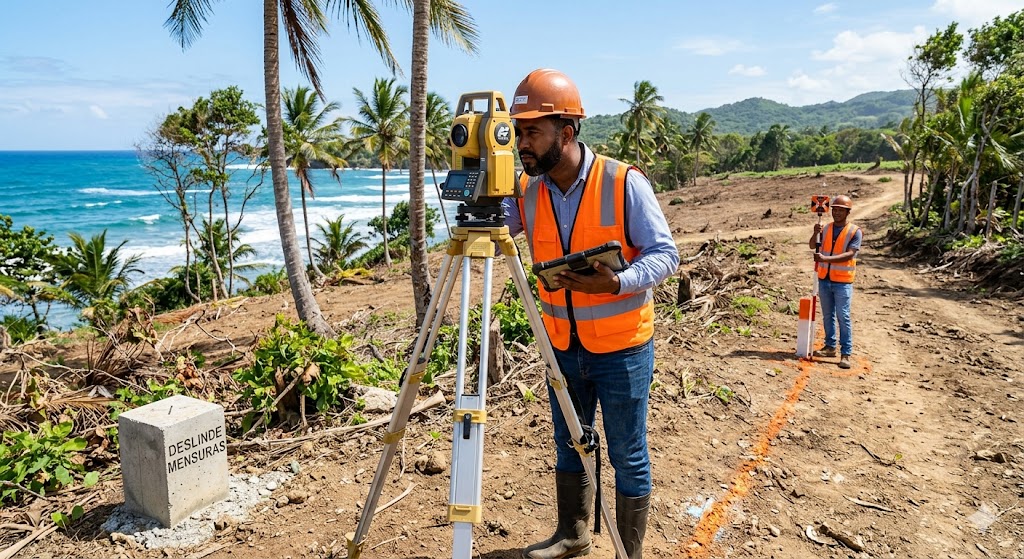
The Deslinde Process Helps Define Official Property Boundaries and Protect Ownership Rights Under Dominican Real Estate Law.
4. Investigation of Pending Litigation
A property may be involved in ongoing legal disputes that affect ownership rights.
Due diligence should include verification of:
- Ownership disputes.
- Inheritance litigation.
- Boundary conflicts.
- Contract disputes.
- Court-ordered restrictions.
Identifying pending litigation before closing helps buyers avoid significant legal complications.
5. Tax Status Verification
Tax compliance is another critical component of legal due diligence.
This review may include:
- Property tax status (IPI).
- Transfer tax obligations.
- Municipal taxes.
- Tax compliance of the seller.
- Verification of applicable exemptions.
Failure to verify tax compliance may result in unexpected liabilities after the purchase.
Learn more in our guide "Closing Costs in the Dominican Republic: What Property Buyers Should Expect."
6. CONFOTUR Verification
For tourism-related developments, buyers should verify whether the project qualifies for benefits under Law No. 158-01 on Tourism Development Incentives (CONFOTUR).
The due diligence process should confirm:
- The existence of a valid CONFOTUR resolution.
- Whether the specific unit is covered.
- The duration of applicable tax exemptions.
- Compliance with project requirements.
Buyers should never assume that a project qualifies for CONFOTUR benefits without independent verification.
Learn more in our guide "Understanding CONFOTUR Benefits in the Dominican Republic."
7. Corporate Due Diligence
When property is owned by a corporation, additional investigation is required.
This review may include:
- Corporate existence.
- Corporate registration.
- Shareholder structure.
- Corporate resolutions.
- Authority to sell.
- Tax compliance.
The legal framework governing Dominican corporations is established primarily by Law No. 479-08 on Commercial Companies, as amended by Law No. 31-11.
Failure to verify corporate authority may create significant ownership and transfer risks.

Corporate Due Diligence Helps Verify Ownership Structure, Corporate Authority, and Legal Capacity to Transfer Real Estate in the Dominican Republic.
8. Review of Condominium and Project Documents
If the property is located within a condominium or gated community, buyers should review:
- Condominium regulations.
- Project declarations.
- Homeowners' association obligations.
- Maintenance fees.
- Restrictions on property use.
- Common area rights.
These documents may contain important limitations affecting the future use and enjoyment of the property.
9. Physical Inspection of the Property
A legal review should be complemented by a physical inspection of the property.
This may help identify:
- Occupancy issues.
- Encroachments.
- Unauthorized construction.
- Access problems.
- Physical conditions affecting value.
The factual condition of the property should correspond with the legal documentation reviewed during due diligence.
Common Red Flags Found During Due Diligence
Some of the most common issues discovered during due diligence include:
- Unresolved succession proceedings.
- Active mortgages.
- Boundary disputes.
- Missing corporate approvals.
- Outstanding taxes.
- Title defects.
- Incomplete registrations.
- Pending litigation.
Early identification of these issues often allows buyers to renegotiate terms or avoid problematic transactions altogether.
Why Professional Legal Representation Matters
Legal due diligence is not simply a checklist.
It is a comprehensive risk-management process designed to protect the buyer's investment and identify issues that may affect ownership rights, transferability, and future property value.
Experienced legal counsel can help evaluate risks and provide recommendations before any funds are irrevocably committed.
How Mastery Real Estate Law Can Help
At Mastery Real Estate Law, we assist clients with:
- Legal due diligence.
- Title verification.
- Property transfers.
- Contract review.
- Corporate ownership investigations.
- CONFOTUR verification.
- Foreign investor representation.
- Real estate legal consulting.
Our goal is to help clients make informed decisions and complete secure real estate transactions.Learn more in our guide "Property Transfers in the Dominican Republic."
Learn more in our guide "Property Transfers in the Dominican Republic."
Final Considerations
Legal due diligence is one of the most effective tools available to protect real estate investments in the Dominican Republic.
A proper investigation should include title verification, registry review, tax verification, litigation searches, boundary confirmation, corporate review, and contract analysis.
Before purchasing any property, buyers should ensure compliance with Law No. 108-05 on Real Estate Registration, applicable tax regulations, Law No. 479-08 on Commercial Companies, and any other legal requirements affecting the transaction.
Investing time in due diligence before closing can help prevent costly legal disputes and protect your investment for years to come.
Frequently Asked Questions
What is included in legal due diligence?
Legal due diligence typically includes title verification, registry review, tax compliance, boundary verification, contract analysis, corporate review, litigation searches, and CONFOTUR eligibility verification when applicable.
Is a Certificate of Title enough?
No. A Certificate of Title confirms ownership, but it does not reveal every legal issue. Buyers should also verify liens, pending litigation, taxes, corporate authority, and other factors before purchasing.
How long does legal due diligence take?
Depending on the complexity of the transaction, due diligence may take several business days or longer if additional documents or investigations are required.
Why should foreign buyers hire a lawyer?
A Dominican real estate attorney can verify ownership, identify legal risks, review contracts, ensure compliance with Dominican law, and protect the buyer's investment throughout the transaction.
Contact Mastery Real Estate Law
Whether you are purchasing a condominium in Punta Cana, a beachfront villa in Cap Cana, a commercial property in Santo Domingo, or investment land anywhere in the Dominican Republic, Mastery Real Estate Law can help protect your investment through comprehensive legal due diligence and professional legal representation.
Published by Mastery Real Estate Law
Protecting Your Investment in the Dominican Republic.