

Closing Costs When Buying Property in the Dominican Republic
What are the closing costs when buying property in the Dominican Republic? Buyers should generally expect to pay property transfer taxes, legal fees, notary and administrative expenses, and, in some cases, financing-related costs. Understanding these expenses before closing helps investors budget properly and avoid unexpected costs.
Purchasing real estate in the Dominican Republic can be an excellent investment opportunity, whether you are acquiring a vacation home, rental property, retirement residence, or commercial asset. Popular destinations such as Punta Cana, Bávaro, Cap Cana, Miches, Bayahibe, and Santo Domingo continue to attract both local and international investors.
At Mastery Real Estate Law, we assist buyers throughout the purchasing process to ensure every transaction is legally secure and financially transparent.
What Are Closing Costs in the Dominican Republic?
Closing costs are the taxes, legal fees, and administrative expenses incurred when ownership of a property is transferred from the seller to the buyer.
In the Dominican Republic, these expenses are generally paid by the buyer unless otherwise agreed in the purchase agreement.
Real estate transactions are subject to various legal and tax regulations, including Property Registration Law No. 108-05 and applicable tax provisions administered by the General Directorate of Internal Taxes (DGII).
Understanding these obligations is an essential part of making a safe real estate investment.
Property Transfer Tax (3%) in the Dominican Republic
The most significant closing cost in most real estate transactions is the Property Transfer Tax, which is equal to 3% of the property's value as determined by the DGII.
Learn more about the property transfer process in our guide "Property Transfers in the Dominican Republic."
It is important to understand that the value assessed by the DGII may differ from the purchase price stated in the sales contract.
Example
- Purchase Price: US$200,000
- DGII Assessed Value: US$180,000
- Transfer Tax (3%): US$5,400
The transfer tax must be paid before the Certificate of Title can be transferred and registered in the buyer's name.
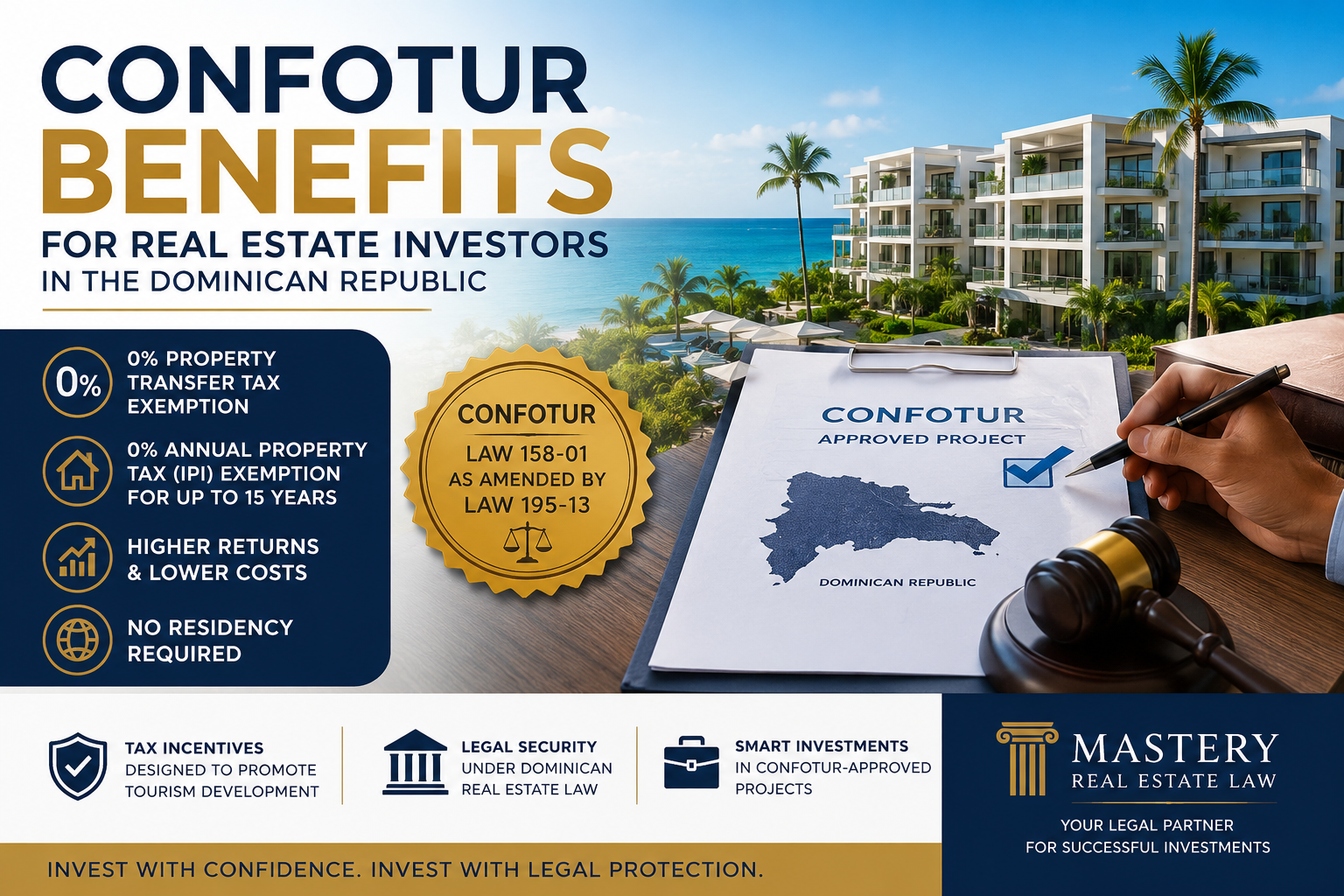
Careful planning of closing costs can help buyers avoid unexpected expenses and ensure a smooth property acquisition process in the Dominican Republic.
Real Estate Legal Fees
Hiring an experienced real estate attorney is strongly recommended for both local and foreign buyers.
Legal services typically include:
- Property title verification
- Legal due diligence
- Contract review and negotiation
- Drafting and reviewing legal documents
- Property transfer procedures
- Registration before the Registry of Titles
Legal fees generally range between 1% and 1.5% of the property's value, depending on the complexity of the transaction.
Although legal representation is not legally required, it is one of the most effective ways to avoid disputes, hidden liabilities, and costly mistakes.
Before purchasing any property, buyers should also read our guide "How to Verify a Property Title in the Dominican Republic."
Notary and Administrative Expenses
Additional closing costs may include:
- Notary fees
- Document certifications
- Legalization of signatures
- Registry processing fees
- Administrative filing expenses
These expenses are usually modest compared to the purchase price but should still be included when calculating the total acquisition cost.
Typical Closing Costs Summary
| Closing Cost | Typical Amount |
| Property Transfer Tax | 3% |
| Legal Fees | 1% – 1.5% |
| Notary & Administrative Expenses | Varies |
| Total Estimated Closing Costs | 3% – 5% |
When Are Closing Costs Paid?
Closing costs are generally paid during the closing process, before ownership is officially transferred and the new Certificate of Title is issued by the Registry of Titles. Buyers should ensure that all taxes, legal fees, and required government payments have been completed before registration of the property transfer.
What Documents Are Required at Closing?
A typical real estate closing in the Dominican Republic may require:
- Certificate of Title
- Purchase and Sale Agreement
- Seller and buyer identification documents
- Tax payment receipts
- Registry documentation
- Power of Attorney (if applicable)
- Mortgage documentation (when financing is involved)
Reviewing these documents before closing helps ensure that ownership can be transferred without unnecessary delays.
CONFOTUR Tax Exemptions
Many real estate developments in Punta Cana, Bávaro, Cap Cana, Miches, Las Terrenas, and other tourism destinations qualify for incentives under CONFOTUR (Law No. 158-01 on Tourism Development).
Learn more in our guide "CONFOTUR Benefits for Real Estate Investors in the Dominican Republic."
These incentives can significantly reduce acquisition costs and increase investment returns.
Eligible buyers may receive exemptions from:
- The 3% Property Transfer Tax
- The Annual Property Tax (IPI)
These benefits often remain in effect for up to 15 years, making CONFOTUR-approved projects particularly attractive to investors.
Before purchasing, buyers should verify whether the project currently enjoys CONFOTUR benefits and whether those benefits remain transferable to new owners.
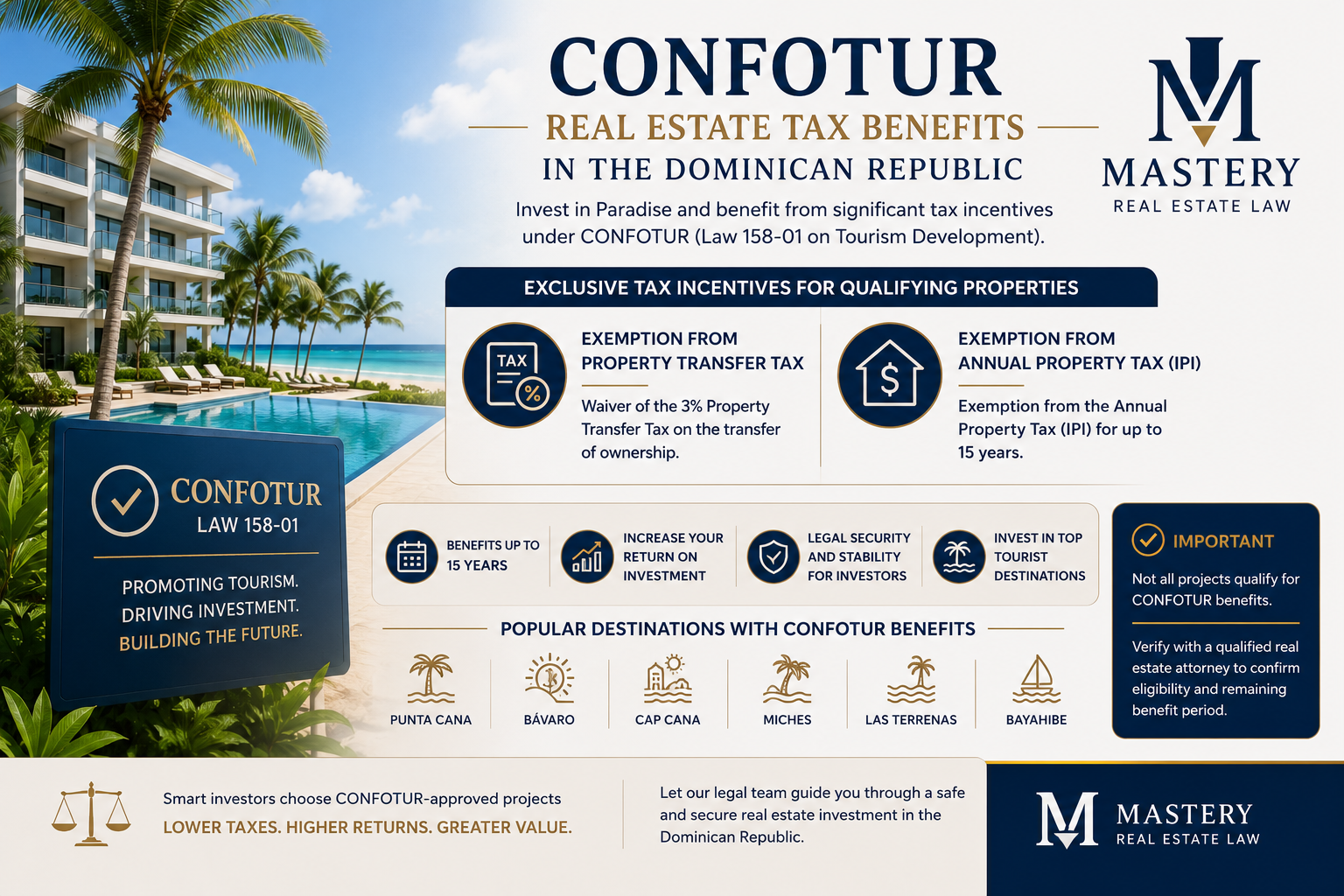
Before purchasing a property, buyers should verify whether the development qualifies for CONFOTUR benefits and confirm the duration and transferability of the applicable tax exemptions.
Mortgage and Financing Costs
If the purchase is financed through a Dominican financial institution, additional expenses may apply, including:
- Loan origination fees
- Property appraisal fees
- Mortgage registration expenses
- Bank administrative charges
These costs vary depending on the lender and financing structure selected by the buyer.
Annual Property Tax (IPI) in the Dominican Republic
Although the Impuesto al Patrimonio Inmobiliario (IPI) is not technically a closing cost, it is an important ownership expense that buyers should understand.
The IPI is generally assessed at 1% annually on the value exceeding the exemption threshold established by the DGII, which is periodically adjusted.
Properties benefiting from CONFOTUR incentives are often exempt from the IPI during the incentive period.
Because exemption thresholds change over time, buyers should seek professional advice to determine whether a property is subject to this tax.
Common Mistakes Buyers Make
Many buyers unknowingly expose themselves to financial and legal risks by making avoidable mistakes such as:
- Failing to budget for transfer taxes and legal fees
- Assuming all projects qualify for CONFOTUR benefits
- Purchasing property without legal due diligence
- Signing contracts without legal review
- Overlooking mortgage registration expenses
- Relying solely on information provided by sellers or agents
Proper planning and professional legal guidance can help avoid these issues.
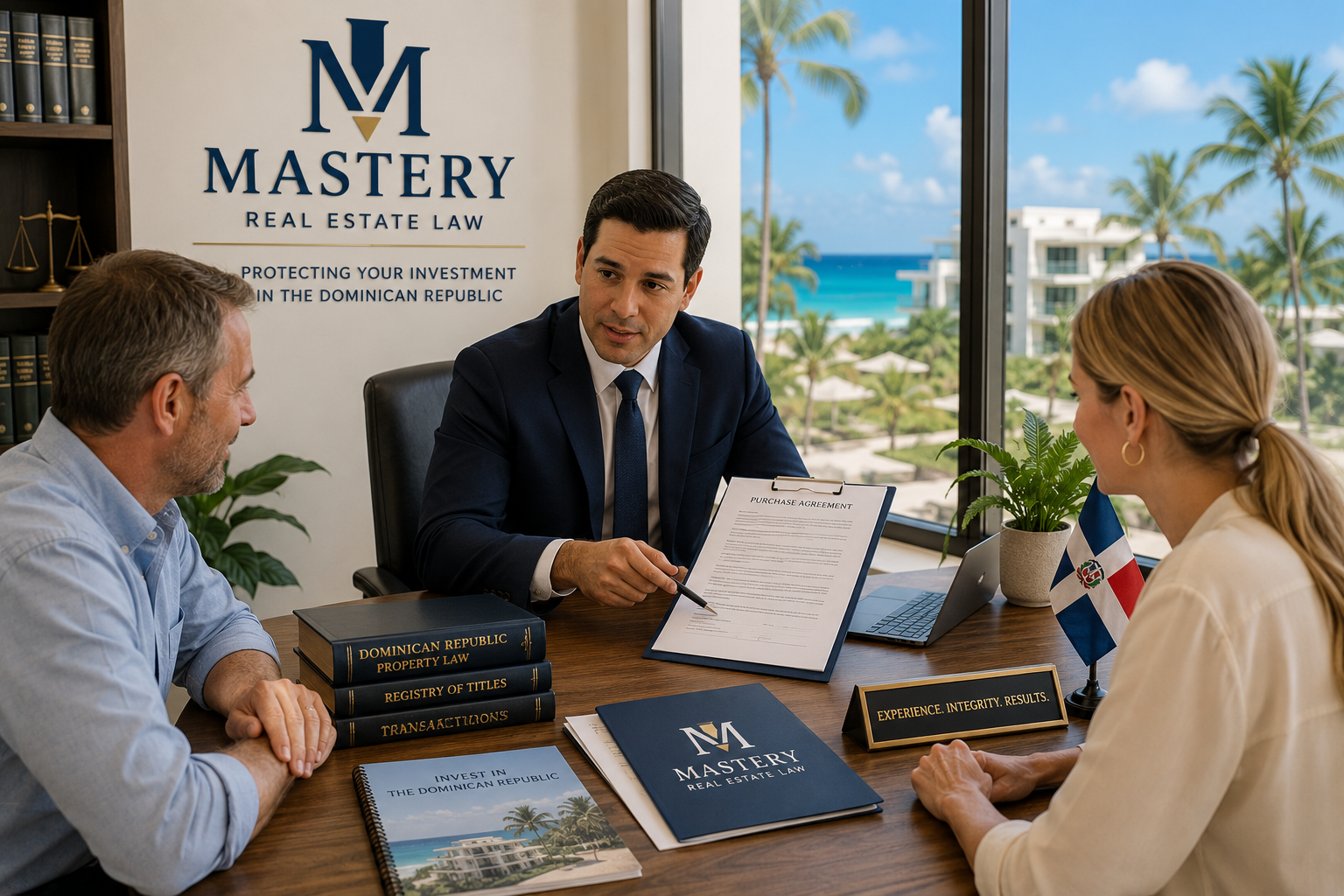
Working with an experienced real estate attorney can help buyers identify legal risks, verify ownership rights, and ensure a secure property transaction in the Dominican Republic.
Frequently Asked Questions
Who pays closing costs in the Dominican Republic?
In most transactions, closing costs are paid by the buyer unless the purchase agreement states otherwise.
How much are closing costs?
Most buyers should budget approximately 3% to 5% of the property's value, depending on taxes, legal fees, and other transaction expenses.
Do CONFOTUR properties have lower closing costs?
Yes. Many CONFOTUR-approved developments qualify for exemptions from the 3% Property Transfer Tax and the Annual Property Tax (IPI), reducing the buyer's overall acquisition costs.
Is the Property Transfer Tax always 3%?
In most real estate transactions, buyers pay a 3% Property Transfer Tax based on the value assessed by the DGII. However, properties qualifying for CONFOTUR incentives may be exempt from this tax.
Are legal fees included in closing costs?
Yes. Legal representation is generally considered part of the total closing costs and helps protect buyers throughout the transaction.
Why Legal Guidance Matters
Many legal and financial risks can be prevented through proper due diligence before purchasing real estate.
A qualified real estate attorney can help buyers:
- Verify ownership rights
- Identify mortgages, liens, and encumbrances
- Confirm zoning and regulatory compliance
- Review contractual obligations
- Ensure a valid and secure transfer of ownership
Professional legal guidance helps protect your investment and significantly reduces the risk of future disputes.
Learn more about the due diligence process in our article "Due Diligence in Real Estate Transactions in the Dominican Republic."
Need Legal Assistance Buying Property in the Dominican Republic?
At Mastery Real Estate Law, we assist local and international buyers with:
- Property Title Verification
- Legal Due Diligence
- Property Transfers
- Purchase Agreement Review
- Foreign Investor Support
- Real Estate Legal Consulting
Whether you are purchasing a condominium in Punta Cana, a villa in Cap Cana, a beachfront property in Miches, or an investment property elsewhere in the Dominican Republic, our team can help ensure your transaction is legally secure from start to finish.
Final Considerations
Closing costs in the Dominican Republic are relatively straightforward, but buyers should carefully budget for taxes, legal fees, and administrative expenses before completing a transaction.
As a general rule, buyers should expect total closing costs to range between 3% and 5% of the property's value, although CONFOTUR-approved properties may significantly reduce these expenses.
Foreign buyers may also find our guide "Can Foreigners Buy Property in the Dominican Republic?" helpful before purchasing real estate.
Understanding these costs and obtaining proper legal guidance are essential steps toward making a safe and successful real estate investment in the Dominican Republic.
Need Legal Assistance?
Need Legal Assistance Buying Property in the Dominican Republic?
If you are planning to purchase property in the Dominican Republic, Mastery Real Estate Law can assist you with title verification, legal due diligence, property transfers, contract review, and closing representation to help ensure a secure investment.
Contact us today to receive experienced legal guidance before completing your real estate transaction.
Mastery Real Estate Law
Protecting Your Investment in the Dominican Republic.