
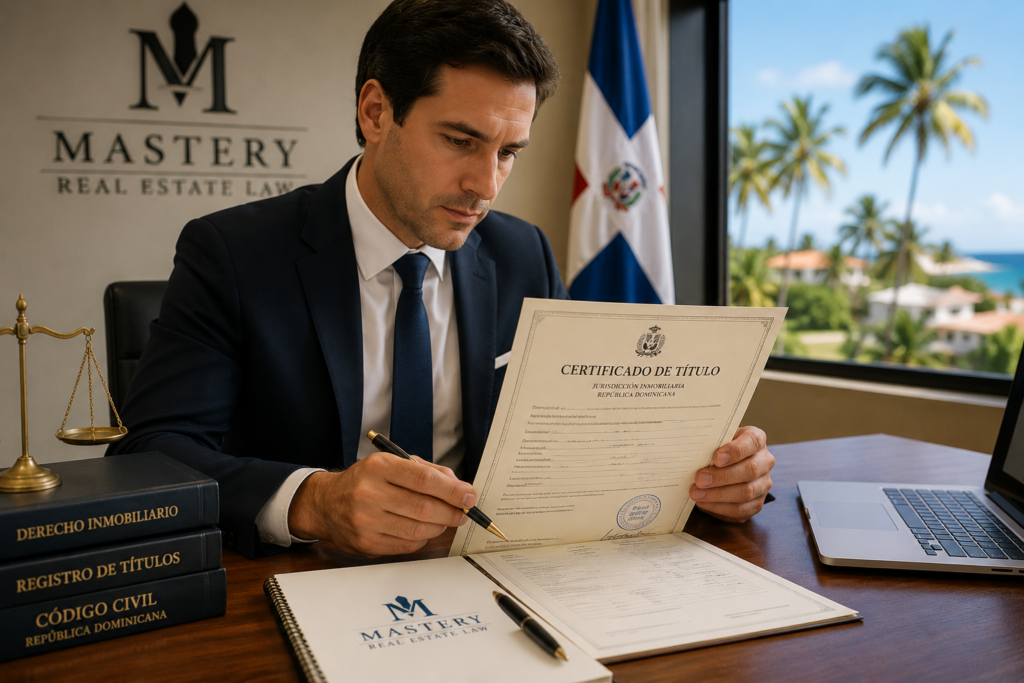
How to Verify a Property Title in the Dominican Republic
How do you verify a property title in the Dominican Republic? Property title verification involves confirming ownership through the Certificate of Title, reviewing Registry of Titles records, checking for mortgages and liens, verifying property boundaries, and conducting legal due diligence before completing the purchase.
Purchasing real estate in the Dominican Republic can be an excellent investment opportunity, particularly in high-demand destinations such as Punta Cana, Bávaro, Cap Cana, Bayahibe, and Miches. However, before signing any purchase agreement or transferring funds, buyers should conduct a thorough legal review of the property's ownership and registration status.
At Mastery Real Estate Law, we regularly assist local and international buyers with title verification and legal due diligence to help protect their investments and minimize legal risks. Property title verification is one of the most important safeguards available to real estate investors in the Dominican Republic.
What Is a Certificate of Title?
A Certificate of Title is the official legal document issued by the Dominican Registry of Titles (Registro de Títulos) that proves ownership of registered real estate. It serves as legal evidence that the registered owner possesses valid ownership rights protected under Dominican law.
Learn more in our guide "Understanding Certificates of Title in the Dominican Republic."
Property ownership registration in the Dominican Republic is governed by Law No. 108-05 on Real Estate Registration, which establishes the legal framework for registering ownership rights and issuing Certificates of Title.
A Certificate of Title typically includes:
- Name of the registered owner.
- Property description and location.
- Property boundaries and survey information.
- Registration details.
- Existing mortgages, liens, or encumbrances.
A valid Certificate of Title is the foundation of a secure real estate transaction and should always be reviewed before any purchase is completed.
Why Title Verification Matters
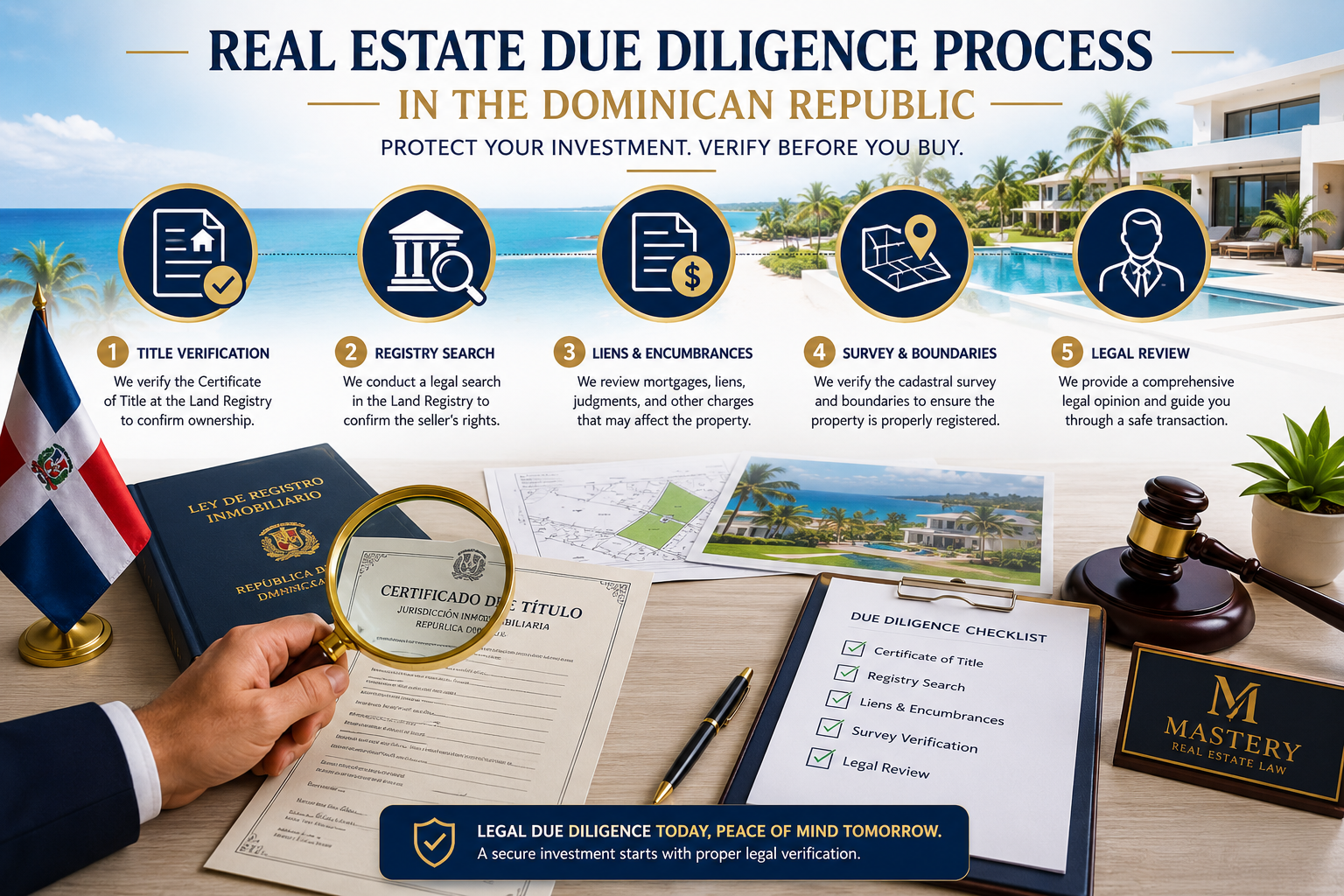
Title Verification and Legal Due Diligence Help Buyers Confirm Ownership Rights, Identify Potential Risks, and Ensure a Secure Property Transfer.
Many buyers assume that if a property is being marketed by a real estate agent, developer, or property owner, ownership has already been verified. Unfortunately, this assumption can lead to costly mistakes.
Title verification is a fundamental component of the legal due diligence process. It allows buyers to confirm ownership rights, identify potential liabilities, and ensure that the property can be legally transferred.
Learn more about the due diligence process in our article "Due Diligence in Real Estate Transactions in the Dominican Republic."
Failure to verify ownership and legal status may expose buyers to:
- Ownership disputes.
- Undisclosed mortgages.
- Boundary conflicts.
- Inheritance claims.
- Fraudulent transactions.
- Delays in property transfer.
A proper legal review helps identify these issues before closing and significantly reduces investment risk.
How to Verify a Property Title in the Dominican Republic
Step 1 — Obtain a Copy of the Certificate of Title
Request a recent copy of the Certificate of Title directly from the seller. Verify that the owner's name, property description, parcel information, and registration details match the property being offered for sale.
Step 2 — Verify Ownership at the Registry of Titles
Conduct an official search through the appropriate Registry of Titles (Registro de Títulos) to confirm that the seller is the registered owner and has the legal authority to transfer ownership.
Step 3 — Review the Complementary Registry
The Complementary Registry (Registro Complementario) contains important legal information affecting the property, including:
- Mortgages.
- Liens.
- Easements.
- Court actions.
- Other registered claims.
Reviewing this document helps determine whether the property can be transferred free of legal restrictions.
Step 4 — Verify the Deslinde
Buyers should confirm whether the property has completed the Deslinde process.
A Deslinde is the legal and technical procedure used to establish and officially register the property's exact boundaries. Properties that have completed the Deslinde process generally provide greater legal certainty and reduce the risk of future boundary disputes.
Step 5 — Verify Property Taxes
Confirm that all applicable property taxes and municipal obligations have been paid and that no outstanding tax liabilities affect the transaction.
Step 6 — Hire a Real Estate Attorney
An experienced Dominican real estate attorney can verify ownership records, review legal documentation, identify potential liabilities, coordinate the due diligence process, and ensure compliance with Dominican real estate law.
Professional legal guidance significantly reduces the risk of purchasing property affected by hidden legal issues.
Before signing any agreement, buyers should also read our guide "Key Clauses Every Dominican Real Estate Purchase Agreement Should Include."
Common Mistakes Foreign Buyers Make
Foreign investors frequently make avoidable mistakes that can create legal and financial complications, including:
- Purchasing property without legal representation.
- Relying solely on verbal assurances.
- Signing contracts before title verification.
- Failing to investigate liens and encumbrances.
- Transferring deposits before completing due diligence.
These mistakes can delay transactions, increase costs, and expose buyers to unnecessary legal risks.
Documents Reviewed During Title Verification
A comprehensive title verification process typically includes reviewing:
- Certificate of Title.
- Complementary Registry.
- Cadastral Survey.
- Property tax records.
- Purchase and Sale Agreement.
- Seller identification documents.
- Corporate documents (when the seller is a company).
Reviewing these documents helps ensure that the transaction complies with Dominican law and that ownership can be transferred without unexpected legal complications.
Frequently Asked Questions
Can I verify a property title online?
Some registry information may be available electronically, but buyers should always obtain professional legal verification through the Registry of Titles and a qualified real estate attorney.
What is the Complementary Registry?
The Complementary Registry contains information regarding mortgages, liens, easements, court actions, and other registered claims that may affect the property.
Does a Certificate of Title guarantee a clean title?
No. Although the Certificate of Title confirms ownership, additional legal due diligence is necessary to identify mortgages, liens, pending litigation, or other legal issues that could affect the property.
How long does title verification take?
The timeframe depends on the complexity of the transaction and the availability of registry information, but most title verification processes can be completed within several business days.
How Mastery Real Estate Law Can Help
Our real estate legal services include:
- Property title verification.
- Legal due diligence.
- Purchase agreement review.
- Property transfer assistance.
- Foreign investor legal support.
- Real estate dispute prevention.
We work closely with buyers, investors, and property owners to ensure that every transaction is legally secure, properly documented, and fully compliant with Dominican law.
Final Considerations
Verifying a property's title is one of the most important legal steps when purchasing real estate in the Dominican Republic. A thorough title verification process helps confirm ownership, identify mortgages and liens, verify legal boundaries, and reduce the risk of future disputes.
Whether you are purchasing a vacation home in Punta Cana, an investment property in Bávaro, or beachfront land in Miches, conducting proper legal due diligence before signing any purchase agreement or transferring funds is essential.
Before completing any real estate transaction, buyers should ensure that ownership has been properly verified, all legal documentation has been reviewed, and the transaction complies with Law No. 108-05 on Real Estate Registration.
At Mastery Real Estate Law, we provide comprehensive title verification and real estate legal services designed to help buyers invest with confidence throughout the Dominican Republic.
Need legal assistance before purchasing property in the Dominican Republic?
Contact Mastery Real Estate Law for professional guidance on property title verification, legal due diligence, purchase agreements, and real estate transactions.
Published by Mastery Real Estate Law
Protecting Your Investment in the Dominican Republic.