
Recent Legal Changes Affecting Real Estate Transactions in the Dominican Republic
Recent Legal Changes Affecting Real Estate Transactions in the Dominican Republic
The Dominican Republic continues to attract local and international investors seeking opportunities in residential, commercial, tourism, and vacation rental properties. As the real estate market evolves, buyers, sellers, developers, and investors should remain informed about legal and regulatory developments that may affect real estate transactions.
Understanding current legal requirements can help reduce risks, improve compliance, and facilitate smoother property acquisitions and transfers.
At Mastery Real Estate Law, we assist clients with legal due diligence, title verification, contract review, property transfers, and real estate transactions throughout the Dominican Republic.
Why Legal Changes Matter
Real estate transactions involve more than locating a suitable property and negotiating a purchase price.
Buyers and sellers must comply with:
- Property registration requirements.
- Tax regulations.
- Corporate compliance rules.
- Anti-money laundering requirements.
- Real estate transfer procedures.
Failing to comply with applicable legal requirements may result in delays, additional costs, or legal disputes.

Keeping Up with Legal and Regulatory Developments Can Help Buyers, Sellers, and Investors Make More Informed Real Estate Decisions in the Dominican Republic.
1. Increased Focus on Legal Due Diligence
One of the most significant developments in recent years is the growing emphasis on comprehensive legal due diligence.
Investors are increasingly conducting:
- Title verification.
- Ownership confirmation.
- Review of liens and encumbrances.
- Tax compliance investigations.
- Corporate ownership verification.
- Litigation searches.
As real estate transactions become more sophisticated, due diligence has become a standard practice rather than an optional precaution.
2. Greater Compliance Under Law No. 108-05 on Real Estate Registration
The Dominican real estate registration system continues to operate under Law No. 108-05 on Real Estate Registration and its implementing regulations.
This legal framework governs:
- Property registration.
- Ownership rights.
- Boundary determinations.
- Title certificates.
- Registry procedures.
Investors increasingly recognize the importance of verifying that ownership rights are properly registered before completing a transaction.
3. Increased Importance of Deslinde and Boundary Verification
Property boundary verification continues to play a critical role in Dominican real estate transactions.
Properties with properly completed Deslinde procedures generally provide greater legal certainty regarding:
- Property dimensions.
- Ownership boundaries.
- Development potential.
- Future transferability.
Buyers should carefully review survey documentation and boundary records during the due diligence process.

A Properly Completed Deslinde Process Helps Confirm Property Boundaries, Protect Ownership Rights, and Reduce the Risk of Future Real Estate Disputes in the Dominican Republic.
4. Enhanced Anti-Money Laundering Compliance
Real estate transactions are subject to stricter compliance requirements under Law No. 155-17 Against Money Laundering and Terrorist Financing.
The law may require verification of:
- Identity of the parties.
- Source of funds.
- Beneficial ownership information.
- Corporate documentation.
Foreign investors should be prepared to provide supporting documentation when purchasing real estate.
5. Corporate Ownership and Transparency Requirements
A significant number of Dominican properties are owned by corporations.
As a result, buyers increasingly verify:
- Corporate existence.
- Commercial Registry status.
- Shareholder authority.
- Corporate resolutions.
- Beneficial ownership information.
Corporate transactions should comply with Law No. 479-08 on Commercial Companies, as amended by Law No. 31-11.
6. Continued Interest in CONFOTUR Tax Incentives
Many investors continue to seek opportunities in projects benefiting from Law No. 158-01 on Tourism Development Incentives (CONFOTUR).
Eligible projects may benefit from incentives such as:
- Exemption from the 3% transfer tax.
- Exemption from annual property taxes (IPI).
- Additional tourism-related tax benefits.
Because incentives vary by project, investors should independently verify eligibility before relying on any exemption.
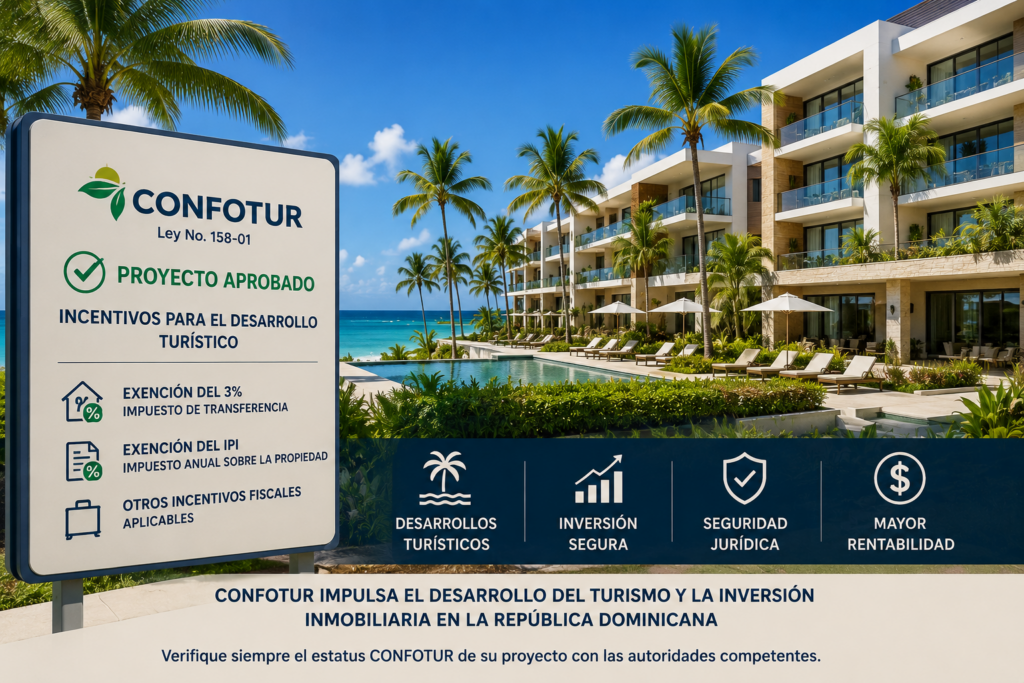
CONFOTUR Incentives Can Significantly Reduce Ownership Costs and Improve Long-Term Returns for Qualified Real Estate Investments in the Dominican Republic.
7. Increased Use of Powers of Attorney in Real Estate Transactions
International investors continue to rely heavily on powers of attorney to complete transactions remotely.
A properly executed power of attorney may allow a representative to:
- Sign purchase agreements.
- Complete property transfers.
- Attend closings.
- Submit Registry of Titles documents.
However, powers of attorney must comply with applicable legal formalities, including notarization, apostille requirements when applicable, and translation into Spanish when executed abroad.
8. Greater Attention to Vacation Rental Investments
The rapid growth of vacation rental properties has increased investor interest in:
- Short-term rental regulations.
- Condominium restrictions.
- HOA requirements.
- Property management obligations.
Investors purchasing properties for vacation rental purposes should review all applicable rules before acquiring a property.
Tax Considerations Remain Important
Real estate transactions continue to be affected by provisions contained in the Dominican Tax Code (Law No. 11-92).
Investors should verify:
- Transfer tax obligations.
- Property tax (IPI) requirements.
- Available exemptions.
- Tax compliance status.
Tax issues should be reviewed during the due diligence process.
Why Staying Updated Is Important
Legal requirements and administrative procedures continue to evolve.
Remaining informed helps buyers and investors:
- Reduce legal risks.
- Avoid delays.
- Improve compliance.
- Protect investments.
- Facilitate smoother closings.
Obtaining legal advice before purchasing property can help identify potential issues early in the transaction process.
How Mastery Real Estate Law Can Help
At Mastery Real Estate Law, we assist clients with:
- Legal due diligence.
- Title verification.
- Property transfers.
- Contract review.
- Foreign investor representation.
- Corporate ownership verification.
- Real estate legal consulting.
Our goal is to help clients navigate Dominican real estate transactions with confidence and legal certainty.
Final Considerations
Recent legal developments continue to reinforce the importance of due diligence, title verification, regulatory compliance, and proper documentation in Dominican real estate transactions.
Before purchasing property, investors should consider applicable legislation, including:
- Law No. 108-05 on Real Estate Registration
- Law No. 155-17 Against Money Laundering and Terrorist Financing
- Law No. 479-08 on Commercial Companies
- Law No. 158-01 on Tourism Development Incentives (CONFOTUR)
- Law No. 11-92 (Dominican Tax Code)
Obtaining qualified legal guidance can help ensure that real estate transactions are completed securely and in compliance with Dominican law.
Contact Mastery Real Estate Law
If you are considering purchasing, selling, or investing in real estate in the Dominican Republic, our team can assist you with legal due diligence, title verification, contract review, property transfers, and real estate transactions throughout the country.
Published by Mastery Real Estate Law
Protecting Your Investment in the Dominican Republic.