
Vacation Rental Laws and Regulations in the Dominican Republic: A Guide for Property Investors
The Dominican Republic has become one of the Caribbean's leading destinations for vacation rental investments. Properties listed on platforms such as Airbnb, VRBO, Booking.com, and other short-term rental websites continue to attract investors seeking rental income, vacation homes, and long-term appreciation.
From Punta Cana and Cap Cana to Las Terrenas, Puerto Plata, Cabarete, Bayahibe, and Santo Domingo, vacation rentals have become an important segment of the Dominican real estate market.
However, before purchasing a property for short-term rental purposes, investors should understand the legal, tax, and regulatory considerations that may affect their investment.
At Mastery Real Estate Law, we assist local and international investors with legal due diligence, title verification, contract review, property transfers, and real estate transactions throughout the Dominican Republic.
Why Vacation Rental Regulations Matter
Many investors focus primarily on rental income projections and property appreciation.
However, vacation rental investments may also be affected by:
- Property ownership regulations.
- Condominium rules.
- Homeowners association (HOA) restrictions.
- Tax obligations.
- Corporate ownership structures.
- Tourism incentives.
- Licensing requirements.
- Anti-money laundering regulations.
Understanding these issues before purchasing property can help reduce legal risks and avoid future disputes.

Vacation Rental Properties Can Provide Attractive Rental Income Opportunities While Allowing Investors to Benefit from the Dominican Republic's Growing Tourism Market.
Can Foreigners Own Vacation Rental Properties?
Yes.
Foreign investors generally enjoy the same property ownership rights as Dominican citizens.
Foreign buyers may:
- Purchase real estate.
- Hold title in their own name.
- Lease property.
- Operate vacation rentals.
- Sell property.
- Transfer property through inheritance.
No Dominican citizenship is required to purchase vacation rental property in the Dominican Republic.
Law No. 108-05 and Property Ownership Rights
Ownership rights over registered real estate are governed by Law No. 108-05 on Real Estate Registration.
Under this legal framework, ownership should be evidenced through a valid Certificate of Title issued by the Dominican land registration system.
Before purchasing a vacation rental property, investors should verify:
- Ownership status.
- Liens and encumbrances.
- Boundary information.
- Registration records.
- Legal restrictions affecting the property.
This review forms an essential part of legal due diligence.
Condominium and HOA Restrictions
One of the most important issues affecting vacation rental properties is the existence of condominium or homeowners association restrictions.
Some communities may regulate:
- Short-term rentals.
- Guest occupancy limits.
- Noise policies.
- Common area usage.
- Parking rules.
- Security requirements.
Investors should carefully review:
- Condominium declarations.
- Community bylaws.
- HOA regulations.
- Internal operating rules.
Failure to review these documents before purchasing property may result in unexpected restrictions on rental activity.
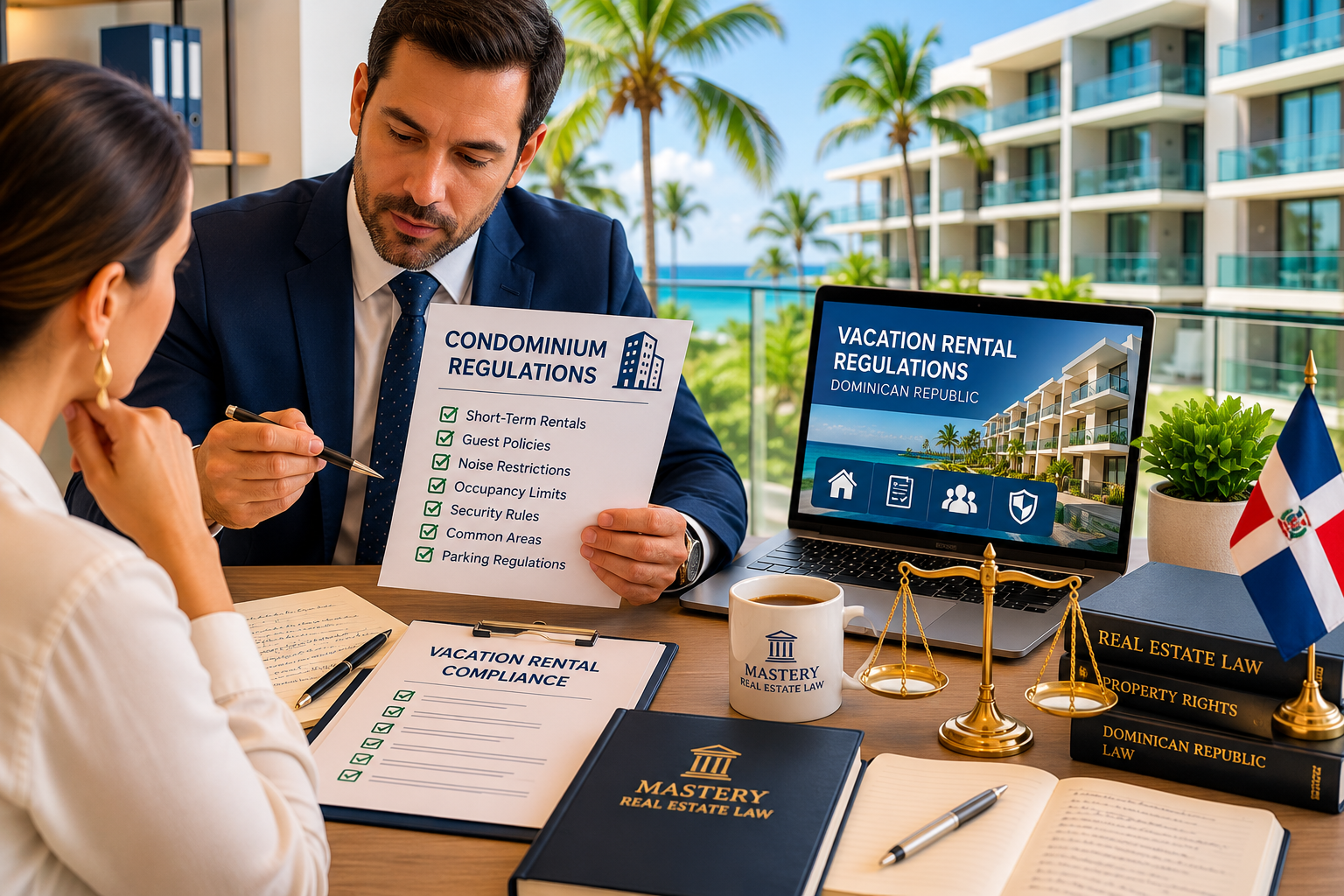
Understanding Condominium and HOA Regulations Before Purchasing a Vacation Rental Property Can Help Investors Avoid Unexpected Restrictions and Protect Their Investment.
Tax Considerations for Vacation Rental Owners
Vacation rental income may create tax obligations depending on the ownership structure and the nature of the activity.
Investors should consider:
- Rental income reporting requirements.
- Corporate tax implications.
- Property transfer taxes.
- Annual property taxes (IPI).
- Applicable exemptions.
Tax planning should be evaluated before acquiring an investment property.
The legal framework governing taxation is primarily established by the Dominican Tax Code (Law No. 11-92).
CONFOTUR Incentives and Vacation Rental Investments
Many investors are attracted to projects benefiting from Law No. 158-01 on Tourism Development Incentives (CONFOTUR).
Qualified projects may benefit from incentives such as:
- Exemption from the 3% transfer tax.
- Exemption from annual property taxes (IPI).
- Additional tourism-related tax benefits.
Because benefits vary by project, investors should verify CONFOTUR eligibility before relying on any tax exemption.
Should You Hold Vacation Rental Property Through a Corporation?
In some situations, investors choose to acquire property through a Dominican corporation.
Potential advantages may include:
- Asset management flexibility.
- Estate planning benefits.
- Multi-owner structures.
- Investment organization.
However, corporate ownership also creates additional legal and compliance requirements.
The legal framework governing Dominican corporations is established primarily by Law No. 479-08 on Commercial Companies, as amended by Law No. 31-11.
Investors should seek legal advice before selecting an ownership structure.
Popular Vacation Rental Markets in the Dominican Republic
Punta Cana and Bávaro
Punta Cana remains one of the country's most active vacation rental markets due to:
- Strong tourism demand.
- International airport access.
- Beachfront communities.
- Luxury developments.
Cap Cana
Cap Cana attracts investors seeking:
- Luxury vacation rentals.
- Marina-front properties.
- Golf course communities.
- Premium tourism amenities.
Bayahibe
Bayahibe continues to grow as a tourism and vacation rental destination due to its proximity to Saona Island and protected natural areas.
Las Terrenas
Las Terrenas remains one of the most established vacation rental markets on the Samaná Peninsula.
Puerto Plata and Cabarete
These northern coastal markets continue to attract investors seeking beachfront rental opportunities and tourism-related investments.
Anti-Money Laundering Compliance
Real estate transactions are subject to compliance requirements under Law No. 155-17 Against Money Laundering and Terrorist Financing.
Buyers and investors may be required to provide:
- Identification documents.
- Source-of-funds information.
- Corporate documentation.
- Beneficial ownership information.
Compliance requirements should be considered during the acquisition process.
Why Legal Due Diligence Is Essential
Before purchasing a vacation rental property, investors should conduct a comprehensive legal review.
This process typically includes:
- Title verification.
- Ownership confirmation.
- Review of liens and encumbrances.
- Boundary verification.
- Tax compliance review.
- Condominium document review.
- Corporate ownership review (if applicable).
Identifying legal risks before closing is generally far less expensive than resolving them after purchasing the property.
How Mastery Real Estate Law Can Help
At Mastery Real Estate Law, we assist clients with:
- Vacation rental property acquisitions.
- Legal due diligence.
- Title verification.
- Contract review.
- Property transfers.
- Foreign investor representation.
- Real estate legal consulting.
Our goal is to help investors acquire and manage Dominican real estate with confidence and legal certainty.
Final Considerations
Vacation rental properties continue to offer attractive investment opportunities throughout the Dominican Republic.
However, successful investments require more than selecting a desirable location. Investors should carefully evaluate ownership rights, condominium restrictions, tax obligations, applicable incentives, and regulatory requirements before purchasing property.
Real estate investments should be reviewed in light of applicable Dominican legislation, including:
- Law No. 108-05 on Real Estate Registration
- Law No. 11-92 (Dominican Tax Code)
- Law No. 158-01 on Tourism Development Incentives (CONFOTUR)
- Law No. 479-08 on Commercial Companies
- Law No. 155-17 Against Money Laundering and Terrorist Financing
Obtaining professional legal guidance can help investors reduce risks and protect their investment.
Contact Mastery Real Estate Law
If you are considering purchasing a vacation rental property in the Dominican Republic, our team can assist you with legal due diligence, title verification, contract review, property transfers, and real estate transactions throughout the country.
Published by Mastery Real Estate Law
Protecting Your Investment in the Dominican Republic.