

Can You Transfer Property Through a Power of Attorney in the Dominican Republic?
Can you transfer property through a Power of Attorney in the Dominican Republic? In many cases, yes. A properly executed Power of Attorney (POA) allows foreign buyers, absentee owners, heirs, and investors to purchase, sell, or transfer real estate without being physically present in the Dominican Republic, provided all legal requirements are satisfied.
Many foreign investors, absentee owners, heirs, and international buyers rely on a Power of Attorney to complete real estate transactions remotely. Understanding the legal requirements before signing a POA can help avoid delays, rejected documents, and unnecessary legal complications.
Dominican law generally allows real estate transactions to be completed through a properly executed Power of Attorney (POA), provided that all legal requirements are satisfied and the authority granted to the representative is sufficiently clear.
At Mastery Real Estate Law, we regularly assist local and international clients with property transfers, powers of attorney, title verification, legal due diligence, and real estate transactions throughout the Dominican Republic.
What Is a Power of Attorney?
A Power of Attorney is a legal document through which one person (the principal) authorizes another person (the attorney-in-fact or representative) to act on their behalf.
Depending on the authority granted, a representative may be authorized to:
- Sign purchase agreements.
- Sign deeds of sale.
- Attend closings.
- Submit documents before government agencies.
- Pay taxes and fees.
- Receive title documents.
- Complete property transfer procedures.
The scope of authority should always be clearly defined in the document.
Is a Power of Attorney Legally Valid in the Dominican Republic?
Yes.
The use of powers of attorney is recognized under the principles of representation and mandate established by the Dominican Civil Code.
In real estate matters, powers of attorney are frequently used when:
- Buyers reside abroad.
- Sellers cannot attend closing.
- Heirs live outside the Dominican Republic.
- Corporate representatives cannot appear personally.
- Investors prefer local legal representation.
The Registry of Titles may require that the power of attorney comply with specific legal formalities before accepting documents signed by a representative.

A Properly Executed Power of Attorney Allows Foreign Investors to Purchase, Sell, and Transfer Real Estate in the Dominican Republic Without Traveling to the Country.
What Authority Should Be Included?
A properly drafted power of attorney should clearly identify:
- Full name of the principal.
- Identification information.
- Address and domicile.
- Full name of the representative.
- Description of the property.
- Scope of authority granted.
Depending on the transaction, the document may authorize the representative to:
- Purchase property.
- Sell property.
- Execute contracts.
- Pay transfer taxes.
- Sign Registry of Titles documents.
- Receive the new Certificate of Title.
A poorly drafted power of attorney may delay or prevent the transfer from being completed.
Can a Power of Attorney Be Signed Outside the Dominican Republic?
Yes.
Many foreign investors execute powers of attorney in their country of residence.
When a power of attorney is executed abroad, additional requirements may apply, including:
- Notarization.
- Apostille certification.
- Consular legalization (when required).
- Certified translation into Spanish.
Documents executed in a language other than Spanish generally must be translated by an authorized legal translator before they can be used before Dominican authorities.
Apostille Requirements
If the country where the power of attorney is executed is a member of the Hague Apostille Convention, the document will generally require an Apostille.
The Apostille helps authenticate the document for use in the Dominican Republic and typically simplifies the legalization process.
Investors should always verify current requirements before execution.
Can a Lawyer Act Under a Power of Attorney?
Yes.
Many buyers and sellers appoint a real estate attorney to act on their behalf.
This arrangement can be particularly beneficial when:
- The client lives abroad.
- The transaction requires multiple government filings.
- Due diligence must be completed.
- Registry procedures are involved.
An experienced attorney can often help facilitate the process and reduce delays.
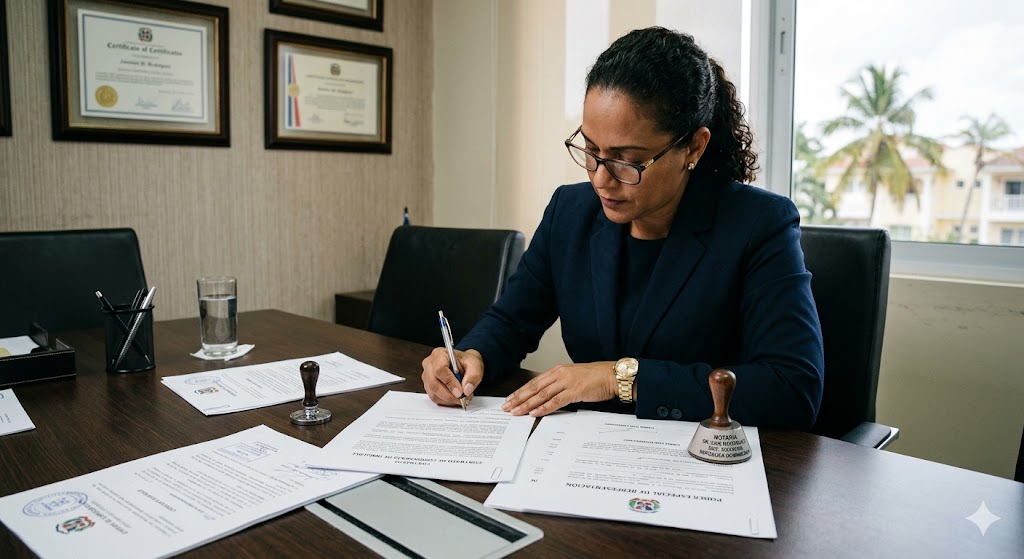
A Properly Drafted Power of Attorney Can Allow Real Estate Transactions to Be Completed Efficiently and Legally Without the Principal Being Physically Present in the Dominican Republic.
Can Property Be Purchased Through a Power of Attorney?
Yes.
A properly authorized representative may generally:
- Negotiate the transaction.
- Sign purchase agreements.
- Complete closing documents.
- Register the transfer.
The authority to purchase should be expressly stated in the power of attorney.
Can Property Be Sold Through a Power of Attorney?
Yes.
Property owners frequently authorize representatives to sell real estate on their behalf.
However, the power of attorney should clearly authorize:
- Sale of the property.
- Execution of transfer documents.
- Receipt of funds (if applicable).
- Completion of registration procedures.
Specific authority reduces the risk of disputes regarding the representative's powers.
Additional Requirements for Corporate Owners
If the property is owned by a corporation, additional documentation may be required.
This may include:
- Corporate resolutions.
- Shareholder approvals.
- Corporate authorizations.
- Commercial Registry documentation.
The legal framework governing Dominican corporations is established primarily by Law No. 479-08 on Commercial Companies, as amended by Law No. 31-11.
Anti-Money Laundering Compliance
Real estate transactions are also subject to anti-money laundering regulations.
Under Law No. 155-17 Against Money Laundering and Terrorist Financing, parties may be required to provide documentation verifying their identity and the source of funds involved in the transaction.
Compliance with these requirements remains important even when a power of attorney is used.
Common Mistakes When Using a Power of Attorney
Some of the most common issues include:
- Incomplete authority provisions.
- Missing Apostille certification.
- Improper notarization.
- Failure to translate documents.
- Expired identification documents.
- Incorrect property descriptions.
Proper legal review before execution can help avoid these problems.
Why Legal Guidance Matters
A power of attorney can simplify a real estate transaction, but only when it has been properly prepared.
Legal review can help ensure:
- Compliance with Dominican law.
- Acceptance by the Registry of Titles.
- Proper authority for the transaction.
- Compliance with tax requirements.
- Compliance with anti-money laundering regulations.
Proper preparation can save significant time and expense.
How Mastery Real Estate Law Can Help
At Mastery Real Estate Law, we assist clients with:
- Powers of attorney.
- Property transfers.
- Legal due diligence.
- Title verification.
- Contract review.
- Foreign investor representation.
- Real estate legal consulting.
Our goal is to help clients complete secure and efficient real estate transactions, whether they are located inside or outside the Dominican Republic.
Final Considerations
In many cases, real estate can be legally purchased, sold, or transferred through a properly executed power of attorney in the Dominican Republic.
However, the document must be carefully drafted and comply with applicable legal requirements, including those established by the Dominican Civil Code, Law No. 108-05 on Real Estate Registration, Law No. 479-08 on Commercial Companies (when corporate entities are involved), and Law No. 155-17 on Anti-Money Laundering.
Obtaining qualified legal guidance can help ensure that the power of attorney is valid, enforceable, and accepted by the relevant authorities.
A properly drafted Power of Attorney can significantly simplify a real estate transaction for buyers and sellers who are unable to travel to the Dominican Republic. Careful legal preparation helps ensure that the document is accepted by the Registry of Titles and that the transaction proceeds without unnecessary delays.
Frequently Asked Questions
Can I buy property in the Dominican Republic through a Power of Attorney?
Yes. A properly drafted and executed Power of Attorney may authorize a representative to purchase property on your behalf.
Can I sell property through a Power of Attorney?
Yes. Property owners may authorize a representative to negotiate, sign transfer documents, and complete the sale, provided the authority is clearly granted.
Does a foreign Power of Attorney need an Apostille?
Generally, yes. If the document is executed in a country that is a member of the Hague Apostille Convention, it will usually require an Apostille before it can be used in the Dominican Republic.
Can a lawyer act under a Power of Attorney?
Yes. Many foreign buyers appoint a Dominican real estate attorney to represent them throughout the transaction.
Can I complete a property transfer without traveling to the Dominican Republic?
In many cases, yes. A properly executed Power of Attorney allows many real estate transactions to be completed remotely.
Does a Power of Attorney expire?
It depends on the terms of the document and applicable law. Some Powers of Attorney remain valid until revoked, while others are limited to a specific transaction or period.
Contact Mastery Real Estate Law
If you need assistance with powers of attorney, property transfers, title verification, legal due diligence, or real estate transactions in the Dominican Republic, our team is ready to help.
Published by Mastery Real Estate Law
Protecting Your Investment in the Dominican Republic.