

Property Transfers in the Dominican Republic
How do property transfers work in the Dominican Republic? A property transfer involves verifying ownership, conducting legal due diligence, paying applicable transfer taxes, registering the transaction with the Registry of Titles, and obtaining a new Certificate of Title in the buyer's name. Following these legal steps helps ensure a secure and legally compliant real estate transaction.
Purchasing real estate in the Dominican Republic can be an excellent investment opportunity, whether you are acquiring a vacation home, an investment property, or a commercial asset. However, completing the transfer of ownership requires compliance with several legal and administrative procedures established under Dominican law.
Many buyers mistakenly believe that signing a purchase agreement automatically makes them the legal owner of a property. In reality, ownership rights are only fully protected once the transfer has been properly registered before the Registry of Titles and a new Certificate of Title has been issued in the buyer's name.
At Mastery Real Estate Law, we guide buyers, investors, and developers through every stage of the property transfer process, ensuring legal compliance and minimizing risks.
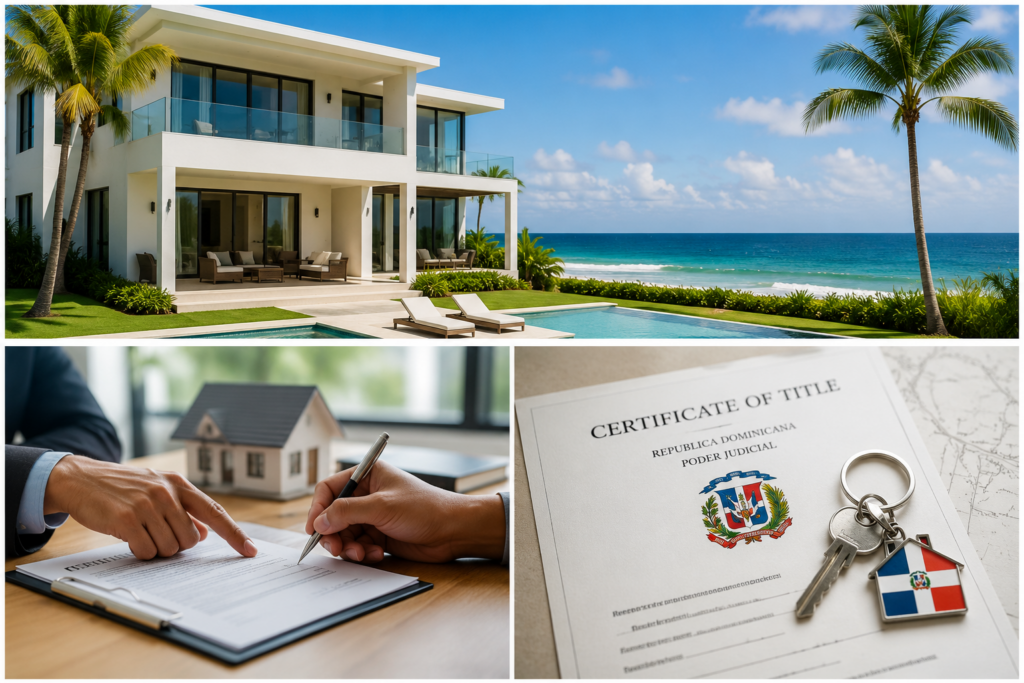
A successful property transfer requires title verification, legal due diligence, payment of transfer taxes, and registration with the Registry of Titles to protect the buyer's ownership rights.
What Is a Property Transfer in the Dominican Republic?
A property transfer is the legal process through which ownership of a registered property is transferred from a seller to a buyer.
In the Dominican Republic, every transfer involving registered real estate must be recorded before the Registry of Titles. This registration process allows the issuance of a new Certificate of Title reflecting the buyer as the new legal owner.
Without proper registration, a buyer may face difficulties proving ownership, obtaining financing, selling the property in the future, or defending ownership rights against third parties.
Why Legal Due Diligence Is Essential Before a Transfer
Before signing any purchase agreement or making any payment, buyers should conduct a complete legal and tax investigation of the property. This process, commonly known as due diligence, helps identify potential risks before the transaction is completed.
Learn more about the due diligence process in our article "Due Diligence in Real Estate Transactions in the Dominican Republic."
A proper due diligence review should include:
- Verification of property ownership.
- Review of the Certificate of Title.
- Confirmation of legal boundaries and approved Deslinde.
- Verification of mortgages and liens.
- Review of pending litigation.
- Tax compliance verification.
- Examination of all contractual documents.
Failing to conduct due diligence can expose buyers to hidden liabilities and costly legal disputes.
Learn more in our guide "Understanding Certificates of Title in the Dominican Republic."
Documents Buyers Should Request From the Seller
One of the most important stages of the transfer process is gathering and reviewing all relevant documentation.
1. Certificate of Title
The Certificate of Title confirms the legal ownership of the property and serves as the primary evidence of ownership rights. Buyers should verify that the seller is the registered owner.
Learn how to verify ownership in our guide "How to Verify a Property Title in the Dominican Republic."
2. Legal Status Certification
This document, issued by the Registry of Titles, confirms whether the property is affected by:
- Mortgages.
- Liens.
- Encumbrances.
- Legal objections.
- Pending claims.
A Legal Status Certification is one of the most valuable tools for identifying legal risks before closing.
3. Purchase and Sale Agreement
The agreement should clearly specify:
- Purchase price.
- Payment terms.
- Property description.
- Closing conditions.
- Rights and obligations of both parties.
Every agreement should be reviewed by an experienced real estate attorney before signing.
Buyers should also read our guide "Key Clauses Every Dominican Real Estate Purchase Agreement Should Include."
4. Seller Identification Documents
The seller's identification documents should be reviewed to confirm legal capacity and ownership rights.
5. Corporate Documentation (When Applicable)
If the seller is a company, buyers should obtain:
- Taxpayer Registration Number (RNC).
- Corporate resolutions.
- Shareholder or board authorizations.
- Identification of the legal representative.
6. Cadastral Documentation
Buyers should verify the cadastral survey and approved property boundaries through the corresponding cadastral records.
Property Transfer Taxes in the Dominican Republic
Learn more about closing costs in our guide "Closing Costs in the Dominican Republic: What Property Buyers Should Expect."

Understanding Transfer Taxes and Registration Requirements Helps Buyers Avoid Delays and Complete Real Estate Transactions Efficiently.
One of the most important financial aspects of any transfer is the payment of transfer taxes.
Generally, Dominican law requires payment of a transfer tax equivalent to approximately 3% of the property's taxable value. The tax is calculated based on the higher value resulting from:
- The contractual purchase price.
- The valuation determined by the General Directorate of Internal Taxes (DGII).
Failure to pay within the applicable timeframe may result in:
- Penalties.
- Interest.
- Administrative surcharges.
Individual Ownership vs. Corporate Ownership
One of the most common questions among investors is whether to purchase property personally or through a corporation.
Purchasing as an Individual
Advantages:
- Simpler acquisition process.
- Lower administrative costs.
- Faster registration procedures.
Considerations:
- Exposure to personal liabilities.
- Succession and inheritance implications.
- Transfer tax obligations.
Purchasing Through a Corporation
Advantages:
- Asset protection.
- Estate planning flexibility.
- Simplified future resale through share transfers.
- Potential continuity of certain tax benefits.
Considerations:
- Additional corporate compliance requirements.
- Annual tax obligations.
- More complex administrative procedures.
The most appropriate structure depends on the investor's objectives, family planning considerations, and investment strategy.
How Long Does the Transfer Process Take?
According to applicable registration regulations, the Registry of Titles generally has up to forty-five (45) business days to process transfer applications and issue a new Certificate of Title, provided all required documentation has been properly submitted.
However, delays may occur if:
- Documentation is incomplete.
- Taxes remain unpaid.
- Legal inconsistencies are discovered.
- Additional verifications are required.
Common Mistakes Buyers Should Avoid
Many legal disputes originate from avoidable mistakes.
Buyers should avoid:
- Purchasing without title verification.
- Ignoring mortgages or liens.
- Signing contracts without legal review.
- Failing to verify tax obligations.
- Purchasing property without an approved Deslinde.
- Relying solely on information provided by the seller.
Professional legal guidance significantly reduces these risks.
Property Transfers for Foreign Investors
Foreign nationals enjoy the same property ownership rights as Dominican citizens. There are no general restrictions preventing foreigners from purchasing real estate in the Dominican Republic.
Nevertheless, foreign investors should obtain legal assistance to:
- Verify ownership.
- Understand local regulations.
- Ensure tax compliance.
- Review contractual obligations.
- Protect investment interests.
Professional representation helps investors navigate the Dominican legal system with confidence.
Frequently Asked Questions
How long does a property transfer take?
Most property transfers are completed within approximately 45 business days after all required documents have been submitted to the Registry of Titles.
Who pays the transfer tax?
In most transactions, the buyer is responsible for paying the Property Transfer Tax unless otherwise agreed in the purchase agreement.
Is legal due diligence necessary?
Yes. Legal due diligence helps verify ownership, identify mortgages, liens, pending litigation, and other issues that may affect the property.
Can foreigners transfer property in the Dominican Republic?
Yes. Foreign buyers enjoy the same property ownership rights as Dominican citizens and may legally purchase, own, transfer, and sell real estate throughout the Dominican Republic.
What documents are required for a property transfer?
Most transactions require the Certificate of Title, Purchase and Sale Agreement, seller and buyer identification documents, tax payment receipts, Registry of Titles documentation, and any applicable corporate or mortgage documents.
Protect Your Investment with Mastery Real Estate Law
At Mastery Real Estate Law, we provide comprehensive legal services for buyers, investors, and developers throughout the Dominican Republic.
Our services include:
✔ Property Transfers
✔ Title Verification
✔ Legal Due Diligence
✔ Contract Review
✔ Foreign Investor Representation
✔ Real Estate Legal Consulting
✔ Inheritance and Succession Matters
✔ Property Dispute Resolution
Our mission is to provide legal certainty and protect every stage of your real estate investment.
A successful property transfer requires much more than signing a purchase agreement. Buyers must verify ownership, review legal documentation, ensure tax compliance, and complete the registration process correctly.
Whether you are purchasing a vacation property, investment asset, or commercial real estate, conducting proper legal due diligence and working with an experienced real estate attorney can help you avoid costly mistakes and protect your investment for years to come.
Foreign buyers may also find our guide "Can Foreigners Buy Property in the Dominican Republic?" helpful before purchasing real estate.
Need Legal Assistance with a Property Transfer?
Mastery Real Estate Law assists local and international buyers with property transfers, title verification, legal due diligence, contract review, and registration before the Registry of Titles.
Contact us today to ensure your real estate transaction is completed securely and in full compliance with Dominican law.
Published by Mastery Real Estate Law
Protecting Your Investment in the Dominican Republic.