
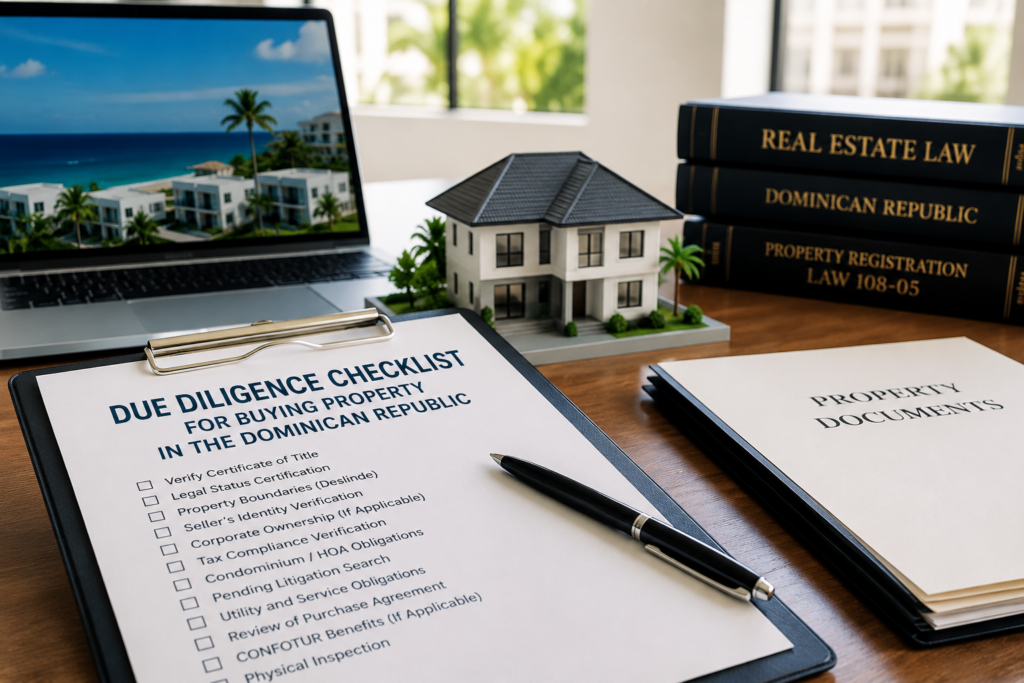
Due Diligence Checklist for Buying Property in the Dominican Republic
A due diligence checklist is one of the most important tools when buying property in the Dominican Republic. Before signing a purchase agreement or transferring funds, buyers should conduct comprehensive legal due diligence to verify ownership, identify legal risks, and ensure the property can be legally transferred. Learn more in our guide "Due Diligence in Real Estate Transactions in the Dominican Republic."
A thorough due diligence investigation helps protect buyers from title defects, ownership disputes, hidden liabilities, tax issues, and other legal complications that could affect the transaction.
At Mastery Real Estate Law, we assist local and international investors with legal due diligence, title verification, contract review, and real estate transactions throughout the Dominican Republic.
Why Is a Due Diligence Checklist Important?
Due diligence is a risk-management process designed to verify the legal, financial, and factual status of a property before closing.
A thorough investigation helps confirm:
- Ownership rights.
- Legal transferability.
- Tax compliance.
- Property boundaries.
- Corporate authority.
- Project approvals.
- Potential legal risks.
Under Law No. 108-05 on Real Estate Registration, ownership rights over registered real estate are evidenced through the Dominican land registration system. However, title verification alone is not sufficient to protect a buyer's investment.

A structured due diligence checklist is your best defense against unexpected liabilities. Our systematic approach ensures that every legal, tax, and corporate aspect of your potential acquisition is thoroughly vetted.
1. Verify the Certificate of Title
The first step is confirming that the seller is the registered owner of the property.
Review:
- Certificate of Title.
- Property registration details.
- Parcel designation.
- Ownership information.
- Registration history.
A title review helps verify that the property can be legally transferred.
Learn more in our guide "Understanding Certificates of Title in the Dominican Republic."
2. Obtain a Certification of Legal Status
Request a current Certificación de Estado Jurídico del Inmueble from the Registry of Titles.
This document may reveal:
- Mortgages.
- Liens.
- Encumbrances.
- Court attachments.
- Easements.
- Other registered claims.
Identifying these issues before closing is essential.
3. Verify Property Boundaries and Deslinde
Boundary verification is one of the most important aspects of due diligence.
Buyers should confirm:
- Existence of an approved Deslinde.
- Survey accuracy.
- Property dimensions.
- Boundary markers.
- Absence of encroachments.
Properties with completed Deslinde procedures generally provide greater legal certainty.
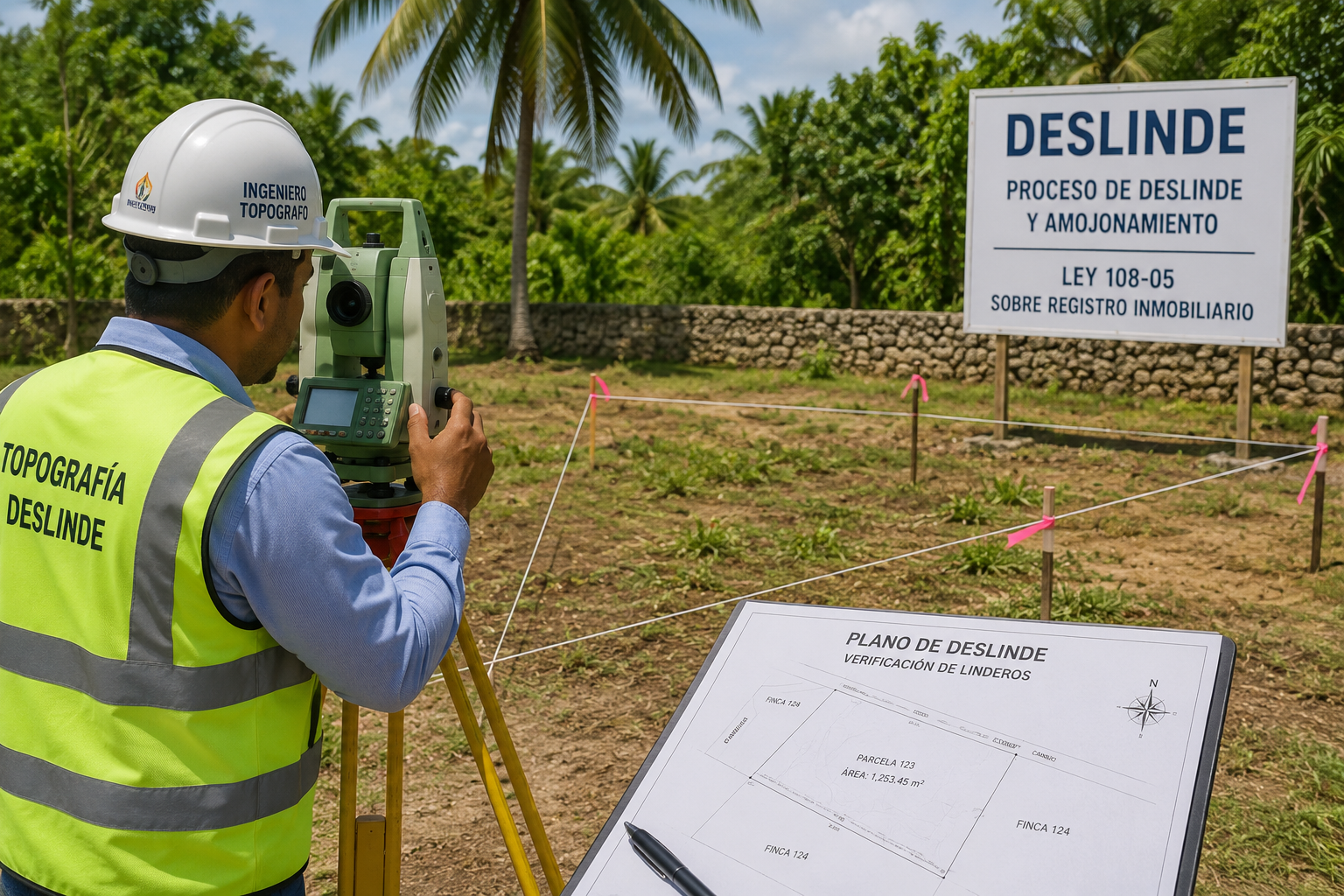
Boundary Verification and the Deslinde Process Help Protect Property Ownership Rights and Reduce the Risk of Future Real Estate Disputes in the Dominican Republic.
4. Verify the Seller's Identity
If the seller is an individual, verify:
- Government-issued identification.
- Civil status.
- Marital status.
- Spousal rights, when applicable.
Under Dominican law, marital property rights may affect ownership and transferability.
5. Verify Corporate Ownership (If Applicable)
If the property is owned by a corporation, additional investigation is necessary.
Review:
- Mercantile Registry Certificate.
- Corporate bylaws.
- Shareholder structure.
- Corporate resolutions.
- Authority to sell.
The legal framework governing Dominican corporations is established primarily by Law No. 479-08 on Commercial Companies, as amended by Law No. 31-11.
6. Verify Tax Compliance
Confirm that all tax obligations have been satisfied.
Review:
- Property tax (IPI) status.
- Municipal taxes.
- Transfer tax obligations.
- Seller tax compliance.
Outstanding tax obligations may delay or complicate the transaction.
7. Verify Condominium and HOA Obligations
If the property is located within a condominium or gated community, request:
- Condominium declaration.
- Community regulations.
- HOA financial statements.
- Maintenance fee certifications.
- Special assessment information.
Buyers should understand all obligations before purchasing.
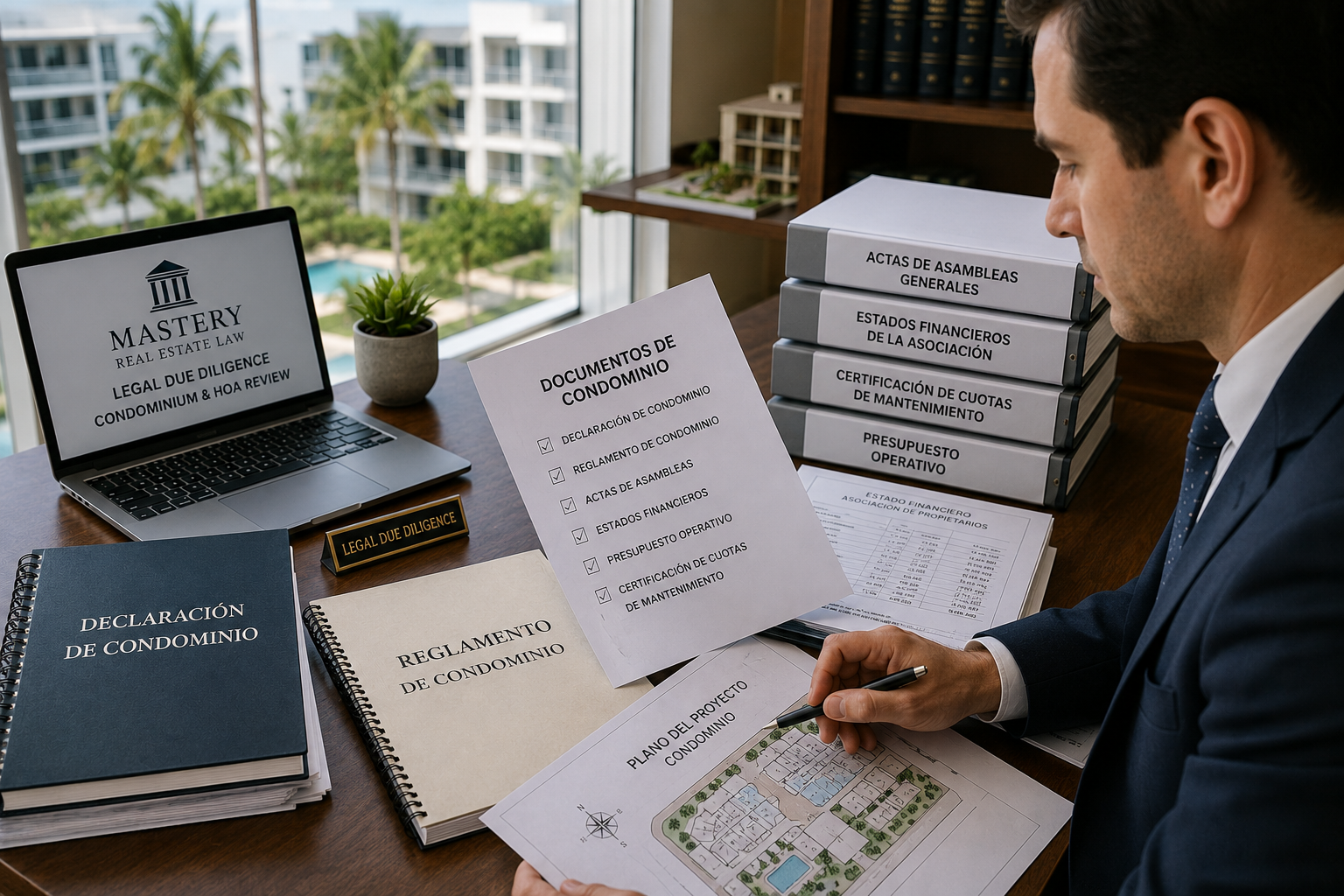
Reviewing Condominium Regulations and HOA Documents Helps Buyers Understand Community Obligations, Ownership Rights, and Potential Restrictions Before Closing.
8. Investigate Pending Litigation
Verify whether the property is involved in:
- Ownership disputes.
- Boundary disputes.
- Succession proceedings.
- Contract litigation.
- Court claims.
Pending litigation may significantly affect ownership rights and marketability.
9. Verify Utility and Service Obligations
Request confirmation that:
- Electricity accounts are current.
- Water bills are paid.
- Maintenance fees are current.
- Utility contracts can be transferred.
Outstanding obligations may become problematic after closing.
10. Review Purchase and Sale Agreements
Before signing any agreement, ensure a legal review is performed.
The contract should clearly address:
- Purchase price.
- Deposit terms.
- Closing conditions.
- Default provisions.
- Transfer obligations.
- Tax responsibilities.
Proper contract drafting helps reduce future disputes.
Learn more in our guide "Key Clauses Every Dominican Real Estate Purchase Agreement Should Include."
11. Verify CONFOTUR Benefits (When Applicable)
For tourism developments, verify whether the project qualifies under Law No. 158-01 on Tourism Development Incentives (CONFOTUR).
Review:
- CONFOTUR resolutions.
- Applicable exemptions.
- Expiration dates.
- Coverage of the specific unit.
These incentives may include:
- Exemption from the 3% transfer tax.
- Exemption from annual IPI taxes.
- Additional tourism-related tax benefits.
Learn more in our guide "Understanding CONFOTUR Benefits in the Dominican Republic."
12. Conduct a Physical Inspection
Legal due diligence should be complemented by a physical inspection.
Verify:
- Property condition.
- Construction quality.
- Occupancy status.
- Access rights.
- Compliance with representations made by the seller.
The physical condition should match the legal documentation.
Common Red Flags Found During Due Diligence
Some of the most common issues include:
- Active mortgages.
- Ownership disputes.
- Missing corporate approvals.
- Incomplete succession proceedings.
- Boundary conflicts.
- Outstanding taxes.
- Unregistered improvements.
- Defective documentation.
Identifying these issues early can prevent costly legal problems.
Frequently Asked Questions
What is legal due diligence in real estate?
Legal due diligence is the process of verifying ownership, reviewing legal documents, checking taxes, confirming boundaries, and identifying potential legal risks before purchasing property.
How long does due diligence take?
Most due diligence investigations can be completed within several business days, depending on the complexity of the transaction and document availability.
Is due diligence required by law?
While not always legally mandatory, due diligence is strongly recommended to protect buyers and reduce legal and financial risks.
Can foreigners conduct due diligence?
Yes. Foreign buyers should always work with a qualified Dominican real estate attorney to perform legal due diligence before purchasing property.
How Mastery Real Estate Law Can Help
At Mastery Real Estate Law, we assist clients with:
- Legal due diligence.
- Title verification.
- Property transfers.
- Contract review.
- Corporate investigations.
- CONFOTUR verification.
- Foreign investor representation.
- Real estate legal consulting.
Our goal is to help clients make informed investment decisions and complete secure real estate transactions.
Learn more in our guide "Property Transfers in the Dominican Republic."
Final Considerations
Conducting proper due diligence is one of the most important steps in purchasing real estate in the Dominican Republic.
A complete investigation should include title verification, registry review, tax compliance verification, boundary confirmation, litigation searches, corporate review, and contract analysis.
Before purchasing property, buyers should ensure compliance with Law No. 108-05 on Real Estate Registration, Law No. 479-08 on Commercial Companies, Law No. 158-01 on Tourism Development Incentives, and all other applicable regulations.
Investing time in due diligence before closing can help avoid costly legal disputes and protect your investment for years to come.
Contact Mastery Real Estate Law
Whether you are purchasing a condominium in Punta Cana, a beachfront villa in Cap Cana, a vacation home in Las Terrenas, or an investment property anywhere in the Dominican Republic, Mastery Real Estate Law can guide you through every stage of the due diligence process to help protect your investment.
Published by Mastery Real Estate Law
Protecting Your Investment in the Dominican Republic.