

How Long Does a Property Transfer Take in the Dominican Republic?
One of the most common questions asked by local and foreign buyers is: How long does a property transfer take in the Dominican Republic? While every transaction is different, understanding the typical timeline can help buyers and sellers plan effectively, avoid unnecessary delays, and complete the transfer with greater confidence.
The time required to transfer property depends on several factors, including the results of legal due diligence, title status, tax compliance, corporate ownership (when applicable), financing, and the processing times of the Registry of Titles.
At Mastery Real Estate Law, we assist buyers, sellers, and investors with property transfers, title verification, legal due diligence, and real estate transactions throughout the Dominican Republic.
Understanding the Property Transfer Process
A real estate transfer does not occur simply because the parties sign a purchase agreement.
Under Law No. 108-05 on Real Estate Registration, ownership of registered real estate is legally transferred only after the transaction has been properly registered with the corresponding Registry of Titles and a new Certificate of Title is issued in the buyer's name.
As a result, the property transfer process involves several legal, tax, and administrative steps.
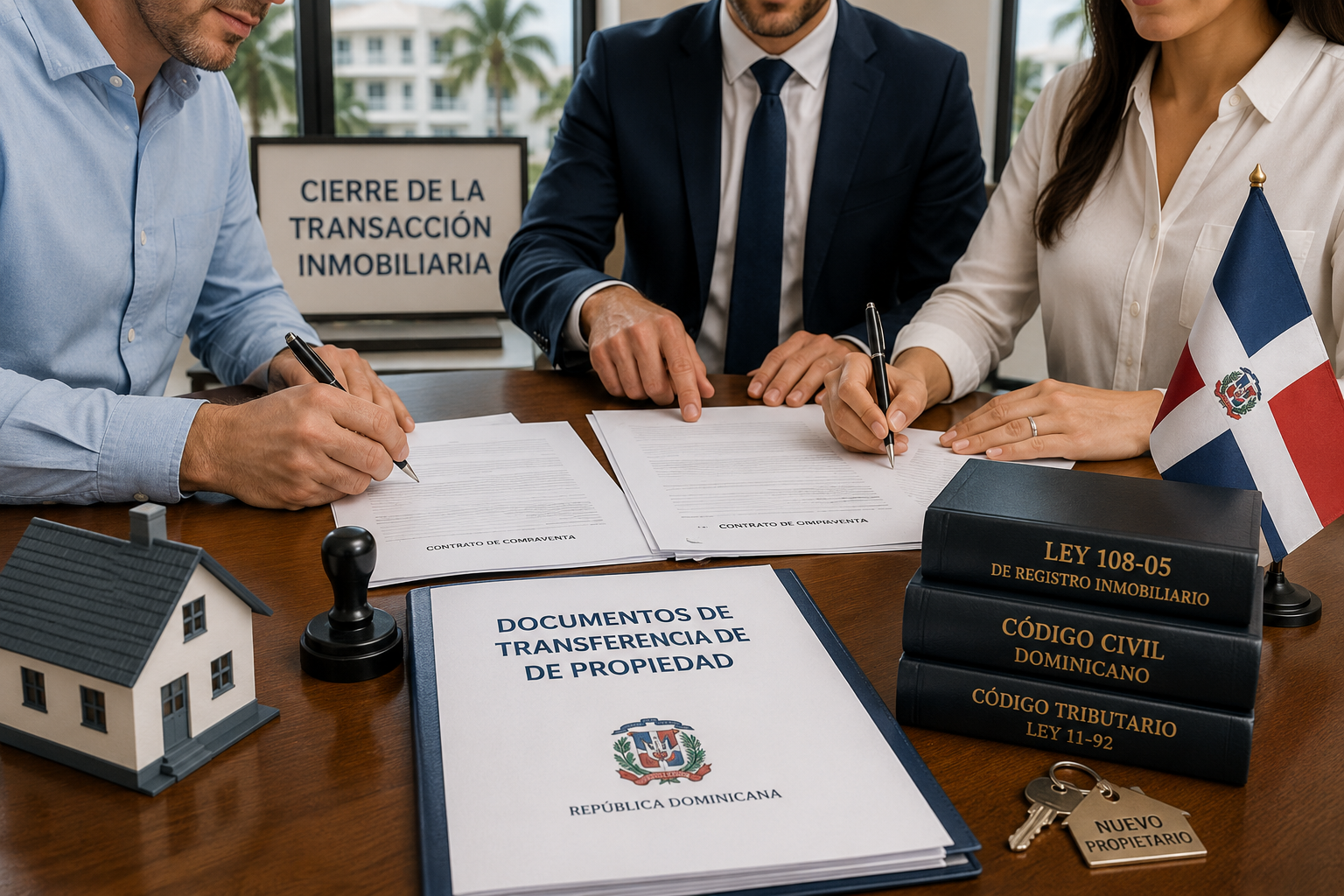
A Properly Managed Closing Process Helps Ensure the Legal Transfer of Ownership and Protects Both Buyers and Sellers in Dominican Real Estate Transactions.
Typical Timeline for a Property Transfer
A standard cash transaction typically takes between 60 and 120 days from the initial agreement to the issuance of the new Certificate of Title.
However, the timeline may vary depending on the circumstances of each transaction.
The process generally includes:
Stage 1: Legal Due Diligence (1–4 Weeks)
Before closing, the buyer's attorney typically conducts legal due diligence.
This review may include:
- Certificate of Title verification.
- Review of liens and encumbrances.
- Boundary verification.
- Tax compliance verification.
- Corporate review (if applicable).
- Contract review.
- Investigation of pending litigation.
The duration of this phase depends largely on the complexity of the transaction.
Learn more in our guide "What Does Legal Due Diligence Include in the Dominican Republic."
Stage 2: Execution of the Purchase Agreement (1–7 Days)
Once due diligence has been completed and all issues have been addressed, the parties may proceed with signing:
- Promise of Sale Agreement.
- Purchase and Sale Agreement.
- Transfer documentation.
- Corporate resolutions (if required).
All documents should be reviewed by legal counsel before execution.
Stage 3: Payment of Transfer Taxes (1–3 Weeks)
Following execution of the transaction documents, the transfer must be reported to the General Directorate of Internal Taxes (DGII).
Under the Dominican Tax Code (Law No. 11-92), property transfers are generally subject to a transfer tax equal to 3% of the property's assessed value, unless an exemption applies.
Learn more in our guide "Taxes and Costs Associated with Property Transfers in the Dominican Republic."
Examples of exemptions may include:
- Certain CONFOTUR-approved properties.
- Specific legal transfers authorized by law.
The time required for tax processing varies depending on the transaction.
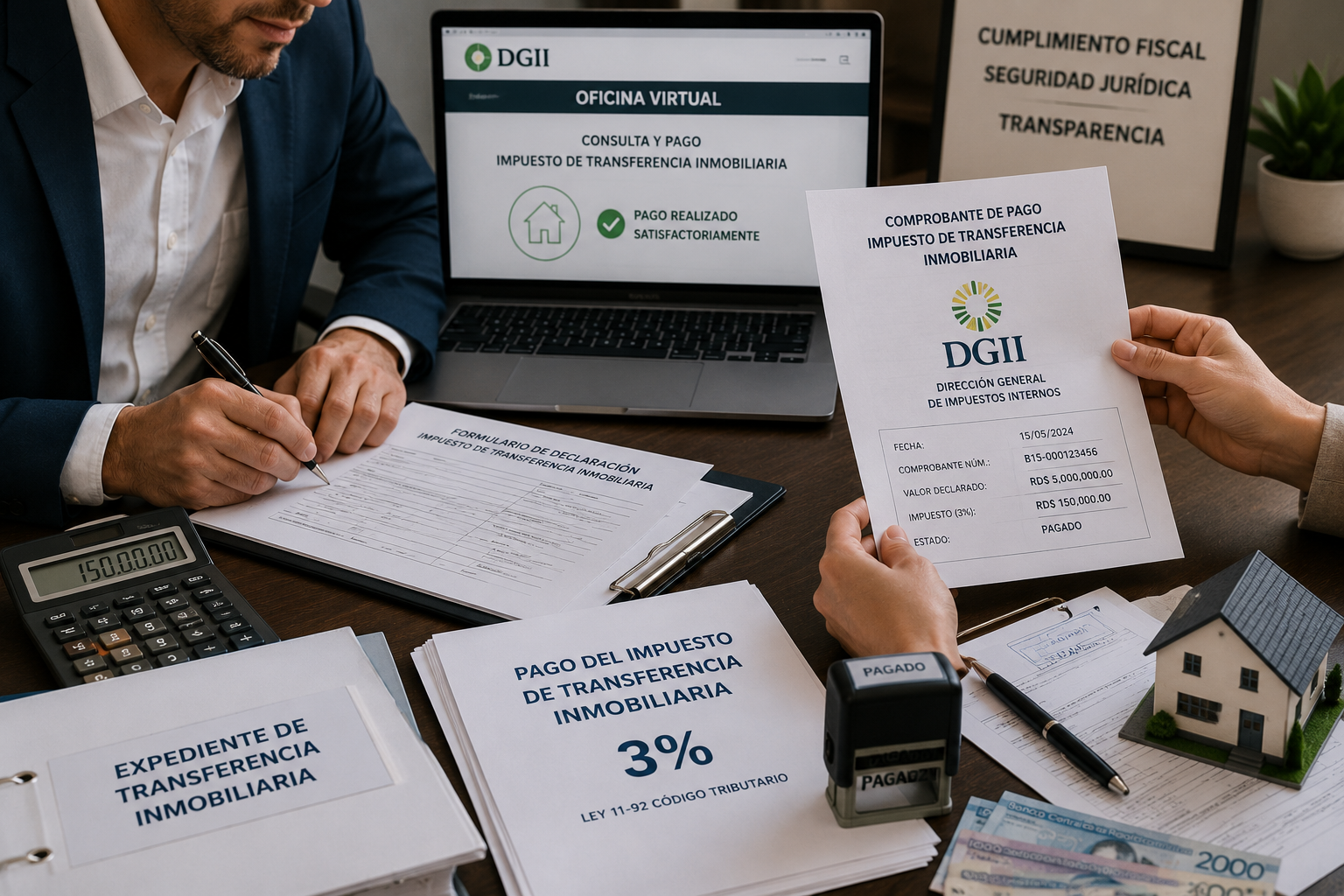
Proper DGII Compliance and Transfer Tax Payment Are Essential Steps Before a New Certificate of Title Can Be Issued to the Buyer.
Stage 4: Filing with the Registry of Titles (4–8 Weeks)
After taxes have been paid and all required documentation has been prepared, the transfer application is submitted to the corresponding Registry of Titles.
The Registry reviews:
- Transfer documentation.
- Tax compliance.
- Ownership records.
- Supporting legal documents.
Once approved, the Registry issues a new Certificate of Title in the buyer's name.
This stage often represents the longest portion of the transfer process.
Factors That May Delay a Property Transfer
While many transactions proceed smoothly, delays may occur when issues are identified during due diligence.
Common causes of delays include:
Outstanding Taxes
Unpaid property taxes or municipal obligations may prevent the transfer from proceeding.
Active Mortgages or Liens
Mortgages and other encumbrances must often be resolved before closing.
Inheritance Issues
If the property forms part of an estate, succession proceedings may need to be completed first.
Under the Dominican Civil Code, succession opens upon the death of the owner.
Boundary or Deslinde Problems
Properties with unresolved boundary issues may require additional legal or technical work.
Corporate Authorization Issues
When property is owned by a corporation, proper corporate approvals must be obtained.
The legal framework governing Dominican corporations is established primarily by Law No. 479-08 on Commercial Companies, as amended by Law No. 31-11.
Missing Documentation
Missing title documents, outdated certifications, or incomplete records frequently delay closings.
How Long Does It Take If Financing Is Involved?
Mortgage financing generally increases the timeline.
When financing is required, buyers should typically expect an additional:
- 30 to 90 days for loan approval.
- Property appraisal.
- Bank compliance procedures.
- Mortgage registration.
As a result, financed transactions often take longer than cash purchases.
Can Foreign Buyers Complete Property Transfers?
Yes.
Foreign investors enjoy the same property ownership rights as Dominican citizens.
Foreign buyers may:
- Purchase property.
- Hold title in their own name.
- Transfer ownership.
- Lease property.
- Sell property.
No Dominican citizenship is required to acquire real estate in the Dominican Republic.
Why Professional Legal Representation Matters
Many delays can be avoided through proper preparation and legal guidance.
An experienced real estate attorney can help:
- Identify title issues early.
- Verify tax compliance.
- Review contracts.
- Coordinate closing documents.
- Facilitate communication between parties.
- Ensure compliance with applicable laws.
Proper legal representation often reduces delays and minimizes transaction risks.
Frequently Asked Questions
How long does a property transfer take in the Dominican Republic?
A standard cash transaction generally takes between 60 and 120 days, depending on the property's legal status, tax compliance, and Registry of Titles processing times.
Can a property transfer be completed faster?
Yes. Transactions involving clear title, complete documentation, and no financing are often completed more quickly.
What causes delays in a property transfer?
Common causes include unresolved liens, unpaid taxes, incomplete documentation, succession proceedings, corporate authorization issues, and Registry processing times.
Does mortgage financing increase the transfer time?
Yes. Mortgage approval, appraisals, bank compliance, and mortgage registration may extend the timeline by 30 to 90 days.
When does ownership legally transfer?
Ownership is legally transferred only after the transaction has been registered with the Registry of Titles and a new Certificate of Title has been issued in the buyer's name.
Can foreign buyers transfer property in the Dominican Republic?
Yes. Foreign buyers generally have the same rights as Dominican citizens to acquire, own, transfer, and sell real estate, subject to applicable laws.
How Mastery Real Estate Law Can Help
At Mastery Real Estate Law, we assist clients with:
- Property transfers.
- Legal due diligence.
- Title verification.
- Contract review.
- Tax compliance review.
- Foreign investor representation.
- Real estate legal consulting.
Our goal is to help clients complete secure and efficient real estate transactions.
Learn more in our guide "Documents Required for a Property Transfer in the Dominican Republic."
Final Considerations
A typical property transfer in the Dominican Republic may take between 60 and 120 days, although each transaction must be evaluated individually.
The timeline depends on the results of due diligence, tax compliance, title status, corporate approvals, and Registry of Titles processing times.
Before purchasing property, buyers should ensure compliance with Law No. 108-05 on Real Estate Registration, the Dominican Tax Code (Law No. 11-92), the Dominican Civil Code, and any other applicable regulations affecting the transaction.
Conducting proper due diligence and obtaining professional legal guidance can help ensure a smooth and secure transfer process.
Although many property transfers are completed within a few months, each transaction presents unique legal and administrative considerations. Proper planning, thorough due diligence, and experienced legal representation can help avoid unnecessary delays and ensure a smooth transfer of ownership.
Contact Mastery Real Estate Law
If you are buying or selling property in the Dominican Republic, our team can assist you with property transfers, title verification, legal due diligence, contract review, and real estate transactions throughout the country.
Published by Mastery Real Estate Law
Protecting Your Investment in the Dominican Republic.