

Taxes and Costs Associated with Property Transfers in the Dominican Republic
When buying real estate in the Dominican Republic, the purchase price is only one part of the total investment. Buyers should also understand the transfer taxes, legal fees, due diligence expenses, and closing costs that may apply before completing the transaction. Property transfer costs—commonly referred to as closing costs—include transfer taxes, legal fees, due diligence expenses, registry and documentation costs, and other transaction-related expenses. Whether purchasing a vacation home, an investment property, commercial real estate, or development land, understanding these costs helps buyers avoid unexpected expenses and make informed investment decisions.
At Mastery Real Estate Law, we assist buyers, sellers, and investors with property transfers, title verification, legal due diligence, and real estate transactions throughout the Dominican Republic.
Why Understanding Transfer Costs Is Important
A property transfer involves more than signing a purchase agreement.
In addition to the purchase price, buyers may incur:
- Transfer taxes.
- Legal fees.
- Due diligence costs.
- Survey expenses.
- Corporate review fees.
- Registry-related expenses.
Understanding these costs before closing allows buyers to budget appropriately and make informed investment decisions.

Carefully Reviewing Transfer Taxes, Legal Fees, and Closing Costs Helps Buyers Make Informed Real Estate Investment Decisions in the Dominican Republic.
The 3% Property Transfer Tax
One of the most significant costs associated with a property transfer is the transfer tax.
Under the Dominican Tax Code (Law No. 11-92), most real estate transfers are subject to a tax equal to 3% of the property's value as determined by the General Directorate of Internal Taxes (DGII).
The tax is generally paid by the buyer before the transfer can be registered.
The amount is typically calculated using:
- The property's assessed value.
- Applicable DGII valuation criteria.
- Supporting transfer documentation.
Learn more in our guide "Property Transfers in the Dominican Republic."
CONFOTUR Tax Exemptions
Some tourism-related developments may qualify for tax benefits under Law No. 158-01 on Tourism Development Incentives (CONFOTUR).
Depending on the project and the applicable approval, benefits may include:
- Exemption from the 3% transfer tax.
- Exemption from annual property taxes (IPI).
- Additional tourism-related tax incentives.
Investors should independently verify whether a specific project has received CONFOTUR approval before relying on these benefits.
Learn more in our guide "Understanding CONFOTUR Benefits in the Dominican Republic."
Legal Fees
Legal representation is one of the most important investments in any real estate transaction.
Legal services may include:
- Title verification.
- Legal due diligence.
- Contract drafting and review.
- Tax compliance assistance.
- Closing coordination.
- Registry processing.
Legal fees vary depending on the complexity of the transaction and the scope of services required.
Learn more in our guide "What Does Legal Due Diligence Include in the Dominican Republic?"
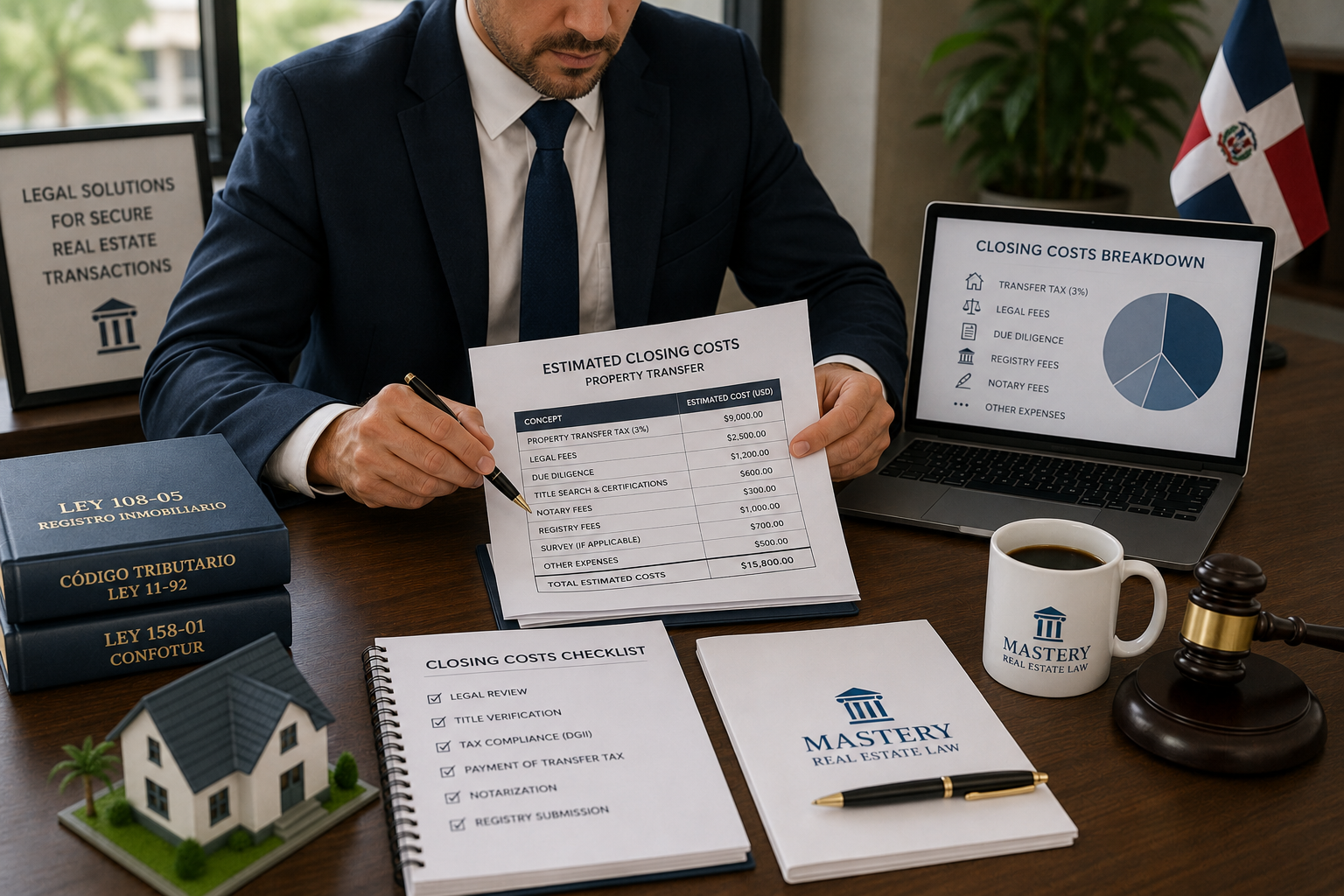
Understanding Legal Fees, Transfer Taxes, and Closing Costs Helps Buyers Accurately Evaluate the Total Cost of a Real Estate Investment in the Dominican Republic.
Due Diligence Costs
A proper due diligence investigation may involve additional expenses.
These may include:
- Registry certifications.
- Title searches.
- Corporate investigations.
- Litigation searches.
- Tax certifications.
- Property inspections.
While these costs vary, they are generally minor compared to the potential risks of purchasing property without proper verification.
Learn more in our guide "Due Diligence Checklist for Buying Property in the Dominican Republic."
Survey and Deslinde Expenses
In certain transactions, buyers may need to review or update property surveys.
Potential costs may include:
- Boundary verification.
- Survey review.
- Deslinde procedures.
- Technical reports.
Learn more in our guide "Understanding the Deslinde Process in the Dominican Republic."
Under Law No. 108-05 on Real Estate Registration, properly defined property boundaries contribute significantly to legal certainty.
Learn more in our guide "Due Diligence Checklist for Buying Property in the Dominican Republic."
Corporate Transaction Costs
When a property is owned by a corporation, additional legal review may be required.
This may involve:
- Corporate document review.
- Shareholder verification.
- Corporate resolutions.
- Commercial Registry certifications.
The legal framework governing Dominican corporations is primarily established by Law No. 479-08 on Commercial Companies, as amended by Law No. 31-11.
Registry and Documentation Costs
Additional administrative costs may include:
- Certified copies.
- Registry certifications.
- Notarial services.
- Authentication expenses.
- Document legalization or apostille services for foreign buyers.
These costs vary depending on the transaction.
Learn more in our guide "Documents Required for a Property Transfer in the Dominican Republic."
Annual Property Taxes (IPI)
Property owners should also consider ongoing ownership costs.
Certain properties may be subject to the Impuesto al Patrimonio Inmobiliario (IPI), commonly referred to as the annual property tax.
The applicability of IPI depends on:
- Property value.
- Ownership structure.
- Available exemptions.
- CONFOTUR benefits, if applicable.
Tax obligations should be reviewed as part of the due diligence process.
Costs for Foreign Buyers
Foreign investors generally enjoy the same ownership rights as Dominican citizens.
However, foreign buyers may incur additional expenses related to:
- Translation of documents.
- Apostille procedures.
- International transfers.
- Corporate structuring.
- Cross-border legal coordination.
Proper planning can help minimize delays and unnecessary expenses.
Hidden Costs Buyers Should Watch For
Reviewing these potential costs before closing helps buyers prepare an accurate investment budget and reduces the likelihood of unexpected financial obligations after acquiring the property.
Buyers should carefully verify whether any additional obligations exist, including:
- Outstanding HOA fees.
- Unpaid utility bills.
- Outstanding taxes.
- Pending litigation.
- Mortgage discharge expenses.
- Boundary correction costs.
These issues are often discovered during legal due diligence.
Why Legal Due Diligence Helps Reduce Costs
Many unexpected expenses can be avoided through proper due diligence.
A comprehensive review helps identify:
- Title defects.
- Encumbrances.
- Tax liabilities.
- Corporate issues.
- Litigation risks.
- Registration problems.
Identifying these issues before closing is generally far less expensive than resolving them after acquiring the property.
How Mastery Real Estate Law Can Help
At Mastery Real Estate Law, we assist clients with:
- Property transfers.
- Tax compliance review.
- Legal due diligence.
- Title verification.
- Contract review.
- Foreign investor representation.
- Real estate legal consulting.
Our goal is to help clients complete secure and cost-effective real estate transactions.
Final Considerations
Understanding the taxes and costs associated with a property transfer is essential for making informed investment decisions in the Dominican Republic.
In addition to the purchase price, buyers should consider transfer taxes, legal fees, due diligence expenses, survey costs, and other transaction-related expenses.
Before purchasing property, buyers should ensure compliance with Law No. 108-05 on Real Estate Registration, the Dominican Tax Code (Law No. 11-92), Law No. 158-01 on Tourism Development Incentives (CONFOTUR), and any other regulations affecting the transaction.
Obtaining professional legal guidance can help buyers understand their financial obligations and avoid costly surprises during the transfer process.
Frequently Asked Questions
Who pays the transfer tax in the Dominican Republic?
In most real estate transactions, the buyer is responsible for paying the 3% property transfer tax before the transfer of ownership can be registered. The tax is generally calculated based on the property's value as determined by the General Directorate of Internal Taxes (DGII). Certain exemptions, such as those available under approved CONFOTUR projects, may apply in specific cases.
Are legal fees mandatory?
Although Dominican law does not require buyers or sellers to hire a lawyer for every real estate transaction, obtaining legal representation is highly recommended. A real estate attorney can conduct legal due diligence, verify ownership, review contracts, identify potential risks, and help ensure that the transaction complies with applicable laws and registration requirements.
Can foreign buyers qualify for CONFOTUR benefits?
Foreign buyers may benefit from CONFOTUR tax incentives when purchasing property within an approved tourism development project that qualifies under Law No. 158-01 on Tourism Development Incentives. Eligibility depends on the project's approval status and the specific incentives granted. Buyers should verify that a development has received CONFOTUR approval before relying on any tax exemptions.
What are closing costs when buying property?
Closing costs typically include the 3% property transfer tax, legal fees, due diligence expenses, registry and certification costs, notarial services, and any additional administrative or transaction-related expenses. The total amount varies depending on the property's characteristics, the complexity of the transaction, and whether additional legal or technical services are required.
Learn more in our guide "Property Transfers in the Dominican Republic."
Does every property pay IPI?
No. The Impuesto al Patrimonio Inmobiliario (IPI) does not apply to every property. Whether IPI is payable depends on several factors, including the property's taxable value, the ownership structure, applicable exemptions under Dominican tax law, and whether the property qualifies for incentives such as those available through approved CONFOTUR projects. Property owners should review their tax obligations before completing a purchase.
Why is legal due diligence important before buying property in the Dominican Republic?
Legal due diligence helps identify title defects, outstanding liens, unpaid taxes, pending litigation, boundary issues, and other legal risks that could affect the property. Conducting a thorough legal review before closing helps buyers make informed decisions and reduces the likelihood of costly disputes after the purchase.
Contact Mastery Real Estate Law
If you are buying or selling property in the Dominican Republic, our team can assist you with property transfers, tax compliance, legal due diligence, title verification, and real estate transactions throughout the country.
Published by Mastery Real Estate Law
Protecting Your Investment in the Dominican Republic.