
How to Check for Liens and Encumbrances in the Dominican Republic
Before purchasing real estate, buyers should check for property liens in the Dominican Republic to determine whether the property is affected by mortgages, encumbrances, easements, or other legal claims that could restrict ownership rights, delay the transfer process, or affect the property's marketability.
At Mastery Real Estate Law, we assist local and international buyers with title verification, registry investigations, legal due diligence, and real estate transactions throughout the Dominican Republic.
What Are Liens and Encumbrances?
A lien or encumbrance is a legal claim, restriction, or burden that affects a property.
Although the owner may still hold legal title, certain rights may exist in favor of third parties.
Common examples include:
- Mortgages.
- Tax liens.
- Court-ordered attachments.
- Easements.
- Usufruct rights.
- Judicial claims.
- Restrictions on transfer.
These issues may affect the owner's ability to sell, finance, transfer, or fully enjoy the property.
Why Is It Important to Verify Liens Before Purchasing Property?
Many title-related issues cannot be identified by reviewing the Certificate of Title alone. A comprehensive registry search helps determine whether the property is affected by mortgages, court orders, easements, tax liens, or other registered claims that could impact the buyer's ownership rights.
A property may appear to have a valid Certificate of Title while still being subject to registered claims or legal restrictions.
Failing to identify these issues before closing may result in:
- Unexpected financial obligations.
- Delayed transactions.
- Ownership disputes.
- Litigation.
- Difficulties obtaining financing.
- Restrictions on future resale.
For this reason, lien verification is a critical component of legal due diligence.

Registry Searches and Legal Due Diligence Help Identify Liens, Mortgages, and Other Encumbrances Before Completing a Real Estate Transaction.
Legal Framework Governing Property Registration
The Dominican real estate registration system is primarily governed by Law No. 108-05 on Real Estate Registration and its implementing regulations.
Under this legal framework, rights affecting registered real estate must generally be recorded within the land registration system in order to provide legal notice to third parties.
As a result, reviewing registry records is one of the most important steps in determining whether a property is free of legal burdens.
Step 1: Review the Certificate of Title
The first step is obtaining a copy of the property's current Certificate of Title.
The Certificate of Title generally confirms:
- Ownership information.
- Property identification.
- Parcel designation.
- Registration details.
However, the Certificate of Title alone may not reveal every issue affecting the property.
Additional investigation is usually required.
Learn more in our guide "Understanding Certificates of Title in the Dominican Republic."
Step 2: Obtain a Certificación de Estado Jurídico
One of the most important documents in the due diligence process is the Certificación de Estado Jurídico del Inmueble.
This certification is issued by the Dominican Registry of Titles and provides information regarding:
- Registered owner.
- Existing mortgages.
- Liens.
- Attachments.
- Restrictions.
- Encumbrances.
- Pending annotations affecting the property.
This document is often the primary source used by attorneys to determine whether title issues exist.
Learn more in our guide "Due Diligence Checklist for Buying Property in the Dominican Republic."
Step 3: Review the Complementary Registry
The Complementary Registry (Registro Complementario) contains important information that may not be immediately apparent from the Certificate of Title itself.
The registry may reveal:
- Mortgage registrations.
- Judicial proceedings.
- Easements.
- Usufruct rights.
- Court orders.
- Other third-party claims.
Reviewing these records helps determine whether the property has a truly marketable title.

A comprehensive property title investigation is the cornerstone of a secure transaction. Our legal team meticulously reviews registry records to ensure that all assets are free of undisclosed liens, mortgages, or judicial annotations.
Common Liens and Encumbrances Found During Due Diligence
Mortgages
A mortgage is one of the most common encumbrances affecting real estate.
The property may serve as collateral for a loan, and the lender's rights remain attached to the property until the mortgage is properly cancelled.
Tax Liens
Outstanding tax obligations may create restrictions affecting property transfers.
Buyers should verify that all tax obligations have been satisfied.
Court Attachments
Judicial orders may prevent the transfer or disposition of property during ongoing legal proceedings.
Easements
An easement grants certain rights to third parties, such as access rights or utility rights, which may affect the use of the property.
Usufruct Rights A usufruct grants another person the right to use and enjoy the property under specific legal conditions.
Step 4: Verify Tax Compliance
Buyers should confirm that:
- Property taxes are current.
- Municipal obligations have been paid.
- No outstanding tax claims exist.
Tax-related issues can delay closings and create unexpected liabilities.
Step 5: Conduct Full Legal Due Diligence
A proper due diligence investigation should include:
- Certificate of Title review.
- Legal status certification.
- Registry review.
- Tax verification.
- Boundary verification.
- Ownership confirmation.
- Corporate review (when applicable).
- Contract review.
Each component helps identify potential risks before funds are transferred.
Learn more in our guide "What Does Legal Due Diligence Include in the Dominican Republic?"
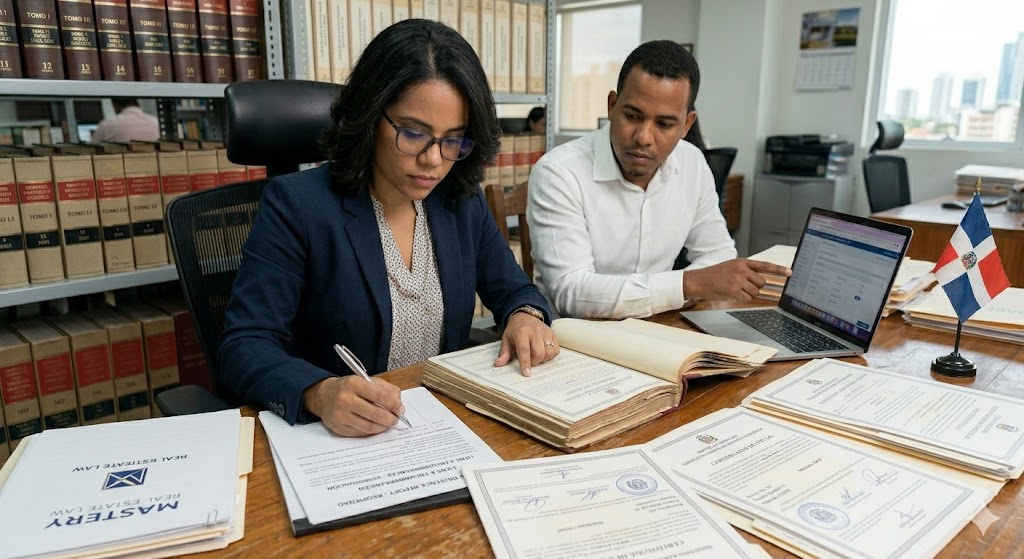
Comprehensive Legal Due Diligence Helps Protect Real Estate Investments by Identifying Potential Risks Before Closing.
Red Flags Buyers Should Watch For
Investors should exercise caution when:
- The seller refuses to provide documentation.
- Title records contain inconsistencies.
- Mortgages remain active.
- Ownership information is unclear.
- Boundary disputes exist.
- Succession proceedings remain unresolved.
- Corporate ownership records are incomplete.
These situations often require additional legal review before proceeding.
How Mastery Real Estate Law Can Help
At Mastery Real Estate Law, we assist clients with:
- Title verification.
- Registry investigations.
- Due diligence.
- Property transfers.
- Contract review.
- Foreign investor representation.
- Real estate acquisitions.
Our goal is to identify legal risks before they become costly problems.
Final Considerations
Verifying liens and encumbrances is one of the most important steps in any real estate transaction in the Dominican Republic.
A valid Certificate of Title does not necessarily guarantee that a property is free from mortgages, liens, easements, judicial claims, or other restrictions.
Before purchasing property, buyers should ensure that the transaction complies with Law No. 108-05 on Real Estate Registration, review the property's legal status through the Registry of Titles, and obtain qualified legal guidance.
A thorough title investigation today can help prevent expensive legal disputes tomorrow.
FAQ
What is a lien on real estate?
A lien is a legal claim against a property that may secure the payment of a debt or protect another legal interest. Liens may affect the owner's ability to sell or transfer the property.
How can I verify if a property has a mortgage?
Buyers should obtain a current Certificación de Estado Jurídico del Inmueble and review the Registry of Titles to identify any registered mortgages or other encumbrances.
Does a Certificate of Title show all liens?
Not always. While the Certificate of Title confirms ownership, additional registry documents such as the Certificación de Estado Jurídico and the Complementary Registry should also be reviewed.
Can foreigners verify property liens?
Yes. Foreign buyers may request legal due diligence through a qualified Dominican real estate attorney before purchasing property.
What happens if a property has an active mortgage?
The mortgage should generally be cancelled or otherwise addressed before ownership is transferred, unless the buyer agrees to assume the obligation under the applicable legal documentation.
Why is legal due diligence important?
Legal due diligence helps identify liens, encumbrances, ownership disputes, tax issues, and other legal risks before completing a real estate transaction.
Contact Mastery Real Estate Law
If you need assistance verifying liens, encumbrances, mortgages, or other title-related issues, our team can assist you with legal due diligence and real estate transactions throughout the Dominican Republic.
Published by Mastery Real Estate Law
Protecting Your Investment in the Dominican Republic.