
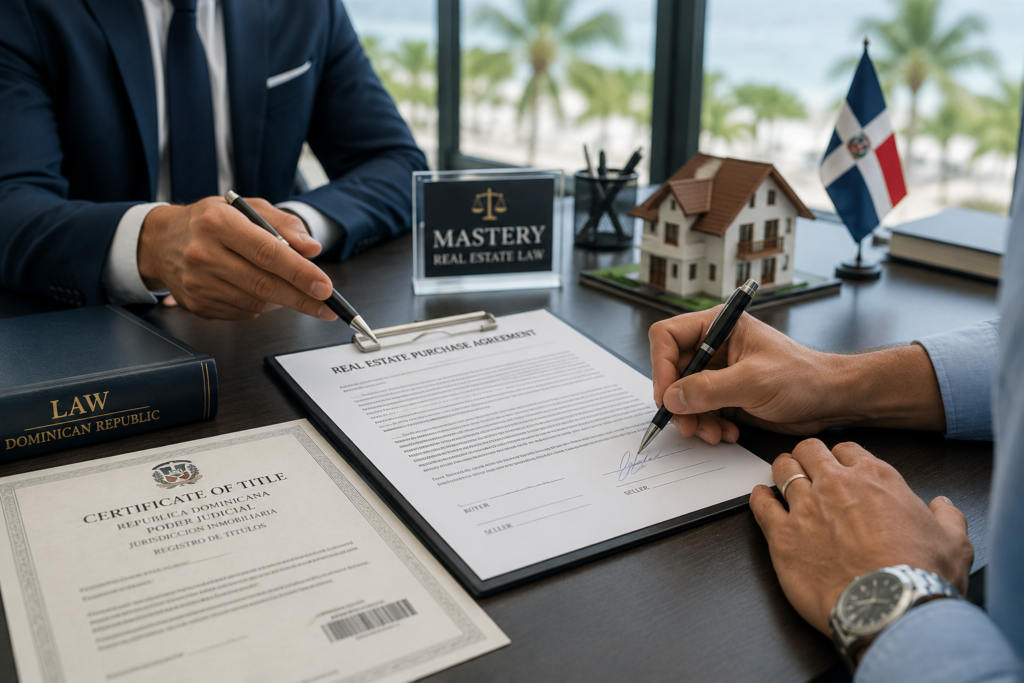
Key Clauses Every Dominican Real Estate Purchase Agreement Should Include
A Dominican Real Estate Purchase Agreement is one of the most important legal documents in any property transaction. Whether you are purchasing a vacation home, rental property, retirement residence, commercial property, or development land, a properly drafted purchase agreement helps protect your investment by clearly defining the rights, obligations, and conditions governing the transaction.
At Mastery Real Estate Law, we regularly assist local and international clients with contract review, legal due diligence, title verification, and real estate transactions throughout the Dominican Republic.
Why the Purchase Agreement Matters
A well-drafted purchase agreement helps prevent misunderstandings by clearly allocating responsibilities, establishing deadlines, defining closing conditions, and identifying the legal remedies available if either party fails to comply with the agreement.
The purchase agreement serves as the legal foundation of the transaction. It establishes the terms under which ownership will be transferred and helps reduce misunderstandings and disputes between the parties.
A well-prepared agreement can:
- Clarify the rights and obligations of the parties.
- Define payment terms and deadlines.
- Establish conditions for closing.
- Protect deposits and purchase funds.
- Reduce legal risks.
- Facilitate a smoother property transfer process.
Without proper legal review, buyers may unknowingly assume risks that could affect their investment.
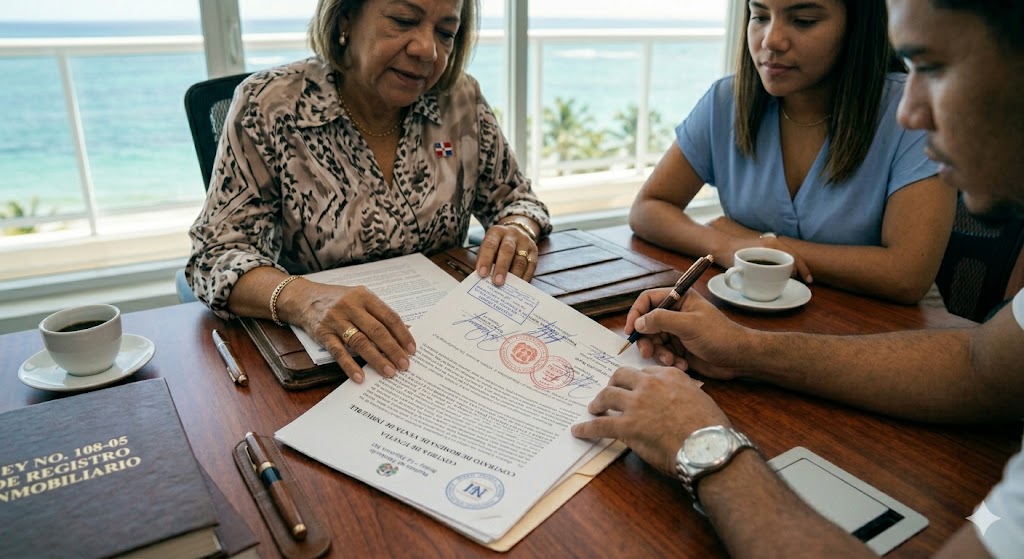
A Carefully Drafted Purchase Agreement Helps Define the Rights and Obligations of the Parties, Reduce Legal Risks, and Facilitate a Secure Real Estate Transaction in the Dominican Republic.
1. Identification of the Parties
Every purchase agreement should clearly identify all parties involved in the transaction.
This section typically includes:
- Full legal names.
- Nationality.
- Marital status.
- Identification or passport numbers.
- Residential addresses.
Proper identification helps confirm the legal capacity of the parties to enter into the agreement.
2. Accurate Property Description
The agreement should contain a complete and accurate description of the property being sold.
This typically includes:
- Property location.
- Parcel number.
- Certificate of Title information.
- Property boundaries.
- Unit or condominium identification, if applicable.
The property description should match the information contained in the Dominican land registration records.
Learn more in our guide "Understanding Certificates of Title in the Dominican Republic."
3. Purchase Price and Payment Terms
One of the most important provisions is the purchase price and method of payment.
The agreement should specify:
- Total purchase price.
- Deposit amount.
- Payment schedule.
- Financing arrangements, if applicable.
- Currency of payment.
- Closing payment requirements.
Clear payment terms help avoid future disputes.
4. Deposit and Escrow Provisions
Many transactions require an initial deposit to reserve the property.
The agreement should address:
- Deposit amount.
- Conditions for refund or forfeiture.
- Escrow arrangements.
- Circumstances allowing cancellation.
Properly drafted deposit provisions help protect both parties throughout the transaction.
5. Seller Representations and Warranties
The seller should provide certain representations regarding the property and ownership rights.
These may include statements confirming:
- Legal ownership of the property.
- Authority to sell.
- Absence of undisclosed liens.
- Absence of ongoing ownership disputes.
- Accuracy of information provided to the buyer.
These provisions provide important protections for purchasers.
6. Title Verification and Due Diligence
A purchase agreement should provide sufficient time for the buyer to conduct legal due diligence.
This process may include:
- Title verification.
- Ownership confirmation.
- Review of encumbrances.
- Tax verification.
- Boundary verification.
- Review of permits and approvals.
Buyers should avoid closing a transaction until due diligence has been completed.
Learn more in our guide "What Does Legal Due Diligence Include in the Dominican Republic."
7. Closing Conditions
The agreement should clearly define the conditions that must be satisfied before closing can occur.
Examples include:
- Completion of due diligence.
- Delivery of required documents.
- Payment of the purchase price.
- Confirmation of clear title.
- Compliance with contractual obligations.
Closing conditions help ensure that the transaction proceeds as intended.
8. Allocation of Taxes and Expenses
The agreement should identify which party is responsible for various costs associated with the transaction.
Potential expenses include:
- Transfer taxes.
- Legal fees.
- Registration fees.
- Notarial expenses.
- Administrative charges.
Clearly allocating expenses reduces confusion at closing.
9. Default and Remedies
The agreement should establish the consequences if either party fails to comply with its obligations.
Common provisions address:
- Buyer default.
- Seller default.
- Termination rights.
- Deposit forfeiture.
- Legal remedies.
These clauses help manage potential disputes and provide certainty regarding available remedies.
10. Dispute Resolution
Although parties hope disputes never arise, the agreement should establish a process for resolving disagreements.
This may include:
- Negotiation.
- Mediation.
- Arbitration.
- Judicial proceedings.
Clearly drafted dispute resolution provisions can reduce uncertainty and legal expenses.
Importance of Legal Due Diligence
Even the most detailed purchase agreement cannot replace proper legal due diligence.
Under Law No. 108-05 on Real Estate Registration, ownership rights over registered real estate should be evidenced by a valid Certificate of Title issued through the Dominican land registration system.
Before signing any agreement, buyers should verify:
- Ownership rights.
- Existing mortgages.
- Liens and encumbrances.
- Property boundaries.
- Tax compliance.
- Regulatory approvals.
Professional legal review can significantly reduce the risks associated with real estate acquisitions.
Learn more in our guide "How to Check for Property Liens and Encumbrances in the Dominican Republic."
Special Considerations for Foreign Investors
Foreign investors generally enjoy the same rights and obligations as Dominican investors regarding property ownership, subject to applicable laws and regulations.
Foreign buyers should pay particular attention to:
- Title verification.
- Contract language.
- Tax implications.
- Corporate ownership structures.
- Inheritance planning.
- Regulatory compliance.
Obtaining qualified legal advice before signing any agreement can help avoid costly mistakes.
How Mastery Real Estate Law Can Help
At Mastery Real Estate Law, we assist clients with:
- Contract review.
- Purchase agreement preparation.
- Legal due diligence.
- Title verification.
- Property transfers.
- Foreign investor representation.
- Real estate legal consulting.
Our goal is to help clients complete real estate transactions with confidence while minimizing legal risks.
Learn more in our guide "Property Transfers in the Dominican Republic."
Final Considerations
A real estate purchase agreement is one of the most important documents in any Dominican real estate transaction. Properly drafted agreements help define the rights and obligations of the parties, reduce legal risks, and facilitate a successful transfer of ownership.
Before signing any purchase agreement, buyers should ensure that the document has been reviewed by qualified legal counsel and that all necessary due diligence has been completed.
Taking these precautions can help protect your investment and contribute to a smoother and more secure real estate transaction.
Frequently Asked Questions
What is a Dominican Real Estate Purchase Agreement?
A Dominican Real Estate Purchase Agreement is a legally binding contract that establishes the terms and conditions governing the sale and purchase of real estate in the Dominican Republic.
Is a Purchase Agreement legally binding?
Yes. Once properly executed, a purchase agreement creates legal obligations for the parties, subject to its terms and applicable Dominican law.
Should a lawyer review the Purchase Agreement?
Yes. Buyers should have the agreement reviewed by a qualified Dominican real estate attorney before signing to verify ownership, identify legal risks, and protect their interests.
Can a Purchase Agreement include due diligence conditions?
Yes. Many agreements include contingencies allowing the buyer to complete legal due diligence before the transaction becomes unconditional.
What happens if the seller breaches the agreement?
The agreement should specify the legal remedies available, which may include termination rights, refund of deposits, damages, or other remedies under Dominican law.
What documents should accompany a Purchase Agreement?
Supporting documents may include the Certificate of Title, Certificación de Estado Jurídico del Inmueble, identification documents, tax records, survey and Deslinde documents, corporate authorizations (when applicable), and other documentation necessary to complete the transaction.
A carefully reviewed purchase agreement can help prevent disputes, clarify the parties' obligations, and protect your investment from the beginning of the transaction. Seeking professional legal advice before signing any contract is one of the most effective ways to ensure a secure real estate purchase in the Dominican Republic.
Contact Mastery Real Estate Law
If you are purchasing real estate in the Dominican Republic, our team can assist you with contract review, legal due diligence, title verification, and property transfers.
Published by Mastery Real Estate Law
Protecting Your Investment in the Dominican Republic.