
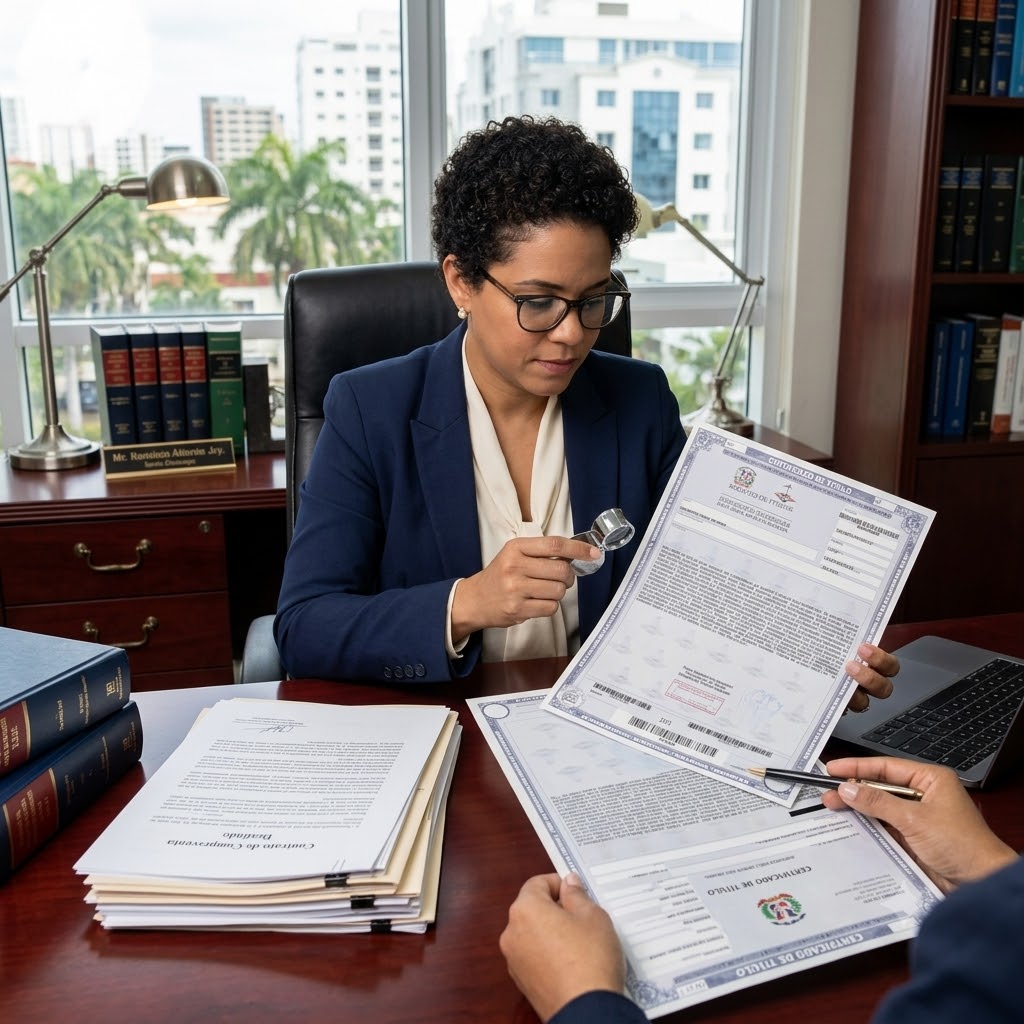
How to Verify Ownership Before Buying Property in the Dominican Republic
Purchasing real estate in the Dominican Republic can be an excellent investment opportunity for both local and foreign buyers. It is essential to verify property ownership before buying any real estate in the Dominican Republic to avoid legal disputes, hidden liabilities, and costly mistakes. Whether acquiring a beachfront condominium in Punta Cana, a residential property in Santo Domingo, or land for development in Miches, verifying ownership before completing the transaction is one of the most important steps in protecting your investment.
Unfortunately, many buyers assume that a seller's possession of a property automatically proves ownership. Under Dominican law, ownership rights over registered real estate are established through the Land Registration System, and proper legal verification is essential before signing any purchase agreement or transferring funds.
At Mastery Real Estate Law, we assist investors, property buyers, developers, and foreign nationals in conducting comprehensive ownership verification and legal due diligence to ensure safe, secure, and legally compliant real estate transactions throughout the Dominican Republic.
Why Ownership Verification Is Important
Failure to verify ownership can expose buyers to serious legal and financial risks, including:
- Purchasing property from someone who is not the legal owner.
- Acquiring property subject to mortgages or liens.
- Inheriting unresolved succession disputes.
- Becoming involved in ownership conflicts among heirs or co-owners.
- Discovering court orders or legal restrictions affecting the property.
- Encountering fraudulent real estate transactions.
Verifying ownership before purchasing allows buyers to identify these risks and avoid costly legal problems.
Legal Framework Governing Property Ownership
Real estate ownership verification in the Dominican Republic is governed primarily by:
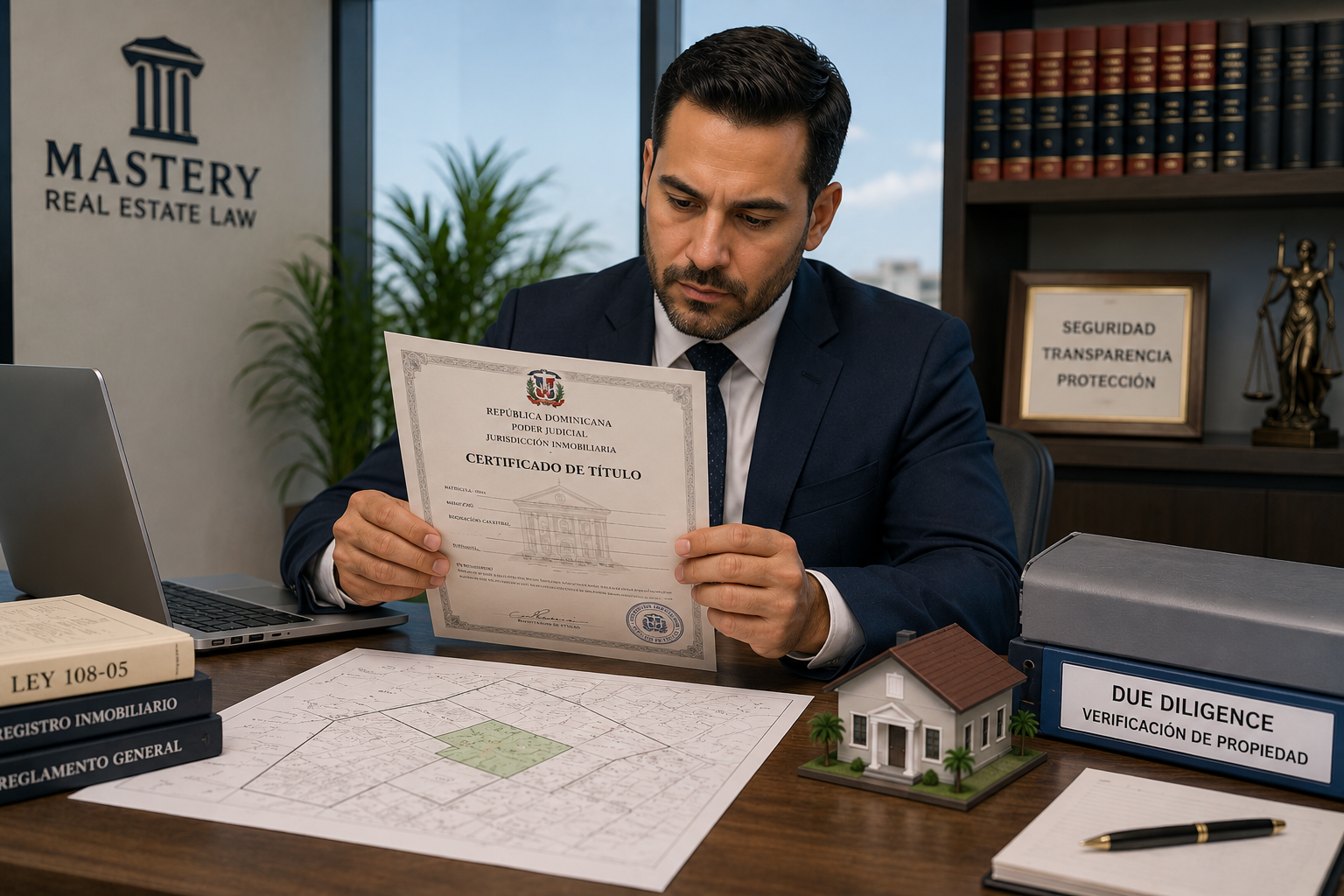
Verifying ownership through the Dominican Land Registration System is one of the most important steps before purchasing real estate in the Dominican Republic.
Law No. 108-05 on Real Estate Registration
Law 108-05 establishes the legal framework for the registration, protection, and transfer of real property rights.
Under this law, ownership rights over registered property are recognized through registration in the corresponding Registry of Titles (Registro de Títulos).
Only registered rights enjoy full legal protection under the Dominican Land Registration System.
General Regulations of the Real Estate Jurisdiction
The General Regulations of the Real Estate Jurisdiction establish procedures for accessing property records, issuing certifications, and maintaining public real estate information.
These regulations promote transparency and legal certainty for buyers and investors.
Step 1: Obtain a Copy of the Certificate of Title
The first step in verifying ownership is obtaining a current copy of the Certificate of Title (Certificado de Título).
To learn more about title verification procedures, read our article "How to Verify a Property Title in the Dominican Republic."
The Certificate of Title identifies:
- The registered owner.
- Property location.
- Parcel designation.
- Cadastral information.
- Ownership rights.
- Registered encumbrances and restrictions.
A current Certificate of Title is the primary document used to confirm ownership under Dominican law.
Step 2: Confirm the Identity of the Registered Owner
Buyers should carefully verify that the individual or entity selling the property is the same person or legal entity appearing on the Certificate of Title.
This verification may include:
Individual Owners
- Dominican National Identification Card (Cédula).
- Passport.
- Marital status documentation.
- Supporting ownership documents.
Corporate Owners
When the seller is a corporation, buyers should review:
- Articles of Incorporation.
- Commercial Registry Certificate.
- Tax Identification Number (RNC).
- Corporate resolutions authorizing the sale.
- Proof of legal representation.
Under Law No. 479-08 on Commercial Companies and Individual Limited Liability Enterprises, corporate authority must be properly established before transferring real estate owned by a company.
Step 3: Verify the Property's Legal Status
Ownership verification extends beyond identifying the owner.
A complete investigation should determine whether the property is affected by:
- Mortgages.
- Liens.
- Judicial seizures.
- Court orders.
- Easements.
- Restrictions on transfer.
- Pending litigation.
These issues may affect the buyer's rights even after ownership is transferred.
Step 4: Request a Certification of Legal Status
A Certification of Legal Status issued by the Registry of Titles provides valuable information regarding:
- Current ownership.
- Registered mortgages.
- Liens and encumbrances.
- Restrictions affecting the property.
This certification is one of the most important documents reviewed during the due diligence process.
You may also need a certified title document. Learn more in our guide "How to Obtain a Certified Copy of a Certificate of Title."
Step 5: Verify Parcel and Cadastral Information
The property's cadastral information should be reviewed to ensure consistency between:
- The Certificate of Title.
- Survey plans.
- Property boundaries.
- Physical occupation of the land.
Errors or discrepancies in cadastral records can create future ownership disputes and registration problems.
Step 6: Review the Seller's Marital Status
Many buyers overlook the importance of marital property rules.
Under the Dominican Civil Code, certain properties may form part of the marital community property regime.
Depending on the circumstances, the consent of a spouse may be required before the property can be legally transferred.
Failure to obtain proper spousal authorization may create legal challenges after closing.
Step 7: Verify Succession Issues
If the property was acquired through inheritance, additional verification is necessary.
Buyers should confirm:
- Completion of succession proceedings.
- Registration of heirs.
- Payment of applicable inheritance taxes.
- Proper transfer of ownership rights.
Properties inherited but not properly transferred may present significant legal risks.
If the property forms part of an estate, read our guide "Title Verification for Inherited Properties in the Dominican Republic."
Step 8: Confirm Tax Compliance
Property taxes and municipal obligations should be reviewed before closing.
Important considerations include:
Real Estate Property Tax (IPI)
Law No. 18-88 governs the Impuesto al Patrimonio Inmobiliario (IPI), which may apply to certain properties exceeding statutory thresholds.
Transfer Tax
Law No. 288-04 establishes the property transfer tax generally equal to 3% of the property's value as determined by the tax authorities.
Verifying tax compliance helps avoid future administrative issues.
Step 9: Conduct Comprehensive Legal Due Diligence
A complete due diligence investigation should include:
- Title verification.
- Ownership confirmation.
- Review of encumbrances.
- Corporate verification.
- Tax compliance review.
- Litigation searches.
- Survey verification.
- Regulatory compliance review.
This process helps identify risks before the purchase is completed.
Common Red Flags Buyers Should Never Ignore
Buyers should proceed cautiously when encountering:
- Sellers unwilling to provide title documents.
- Significant discrepancies in ownership records.
- Missing cadastral information.
- Ongoing litigation involving the property.
- Unregistered inheritance claims.
- Unusually low purchase prices.
- Informal possession without registered ownership.
These situations often require additional legal investigation.
How Foreign Investors Can Protect Themselves
Foreign nationals enjoy the same property ownership rights as Dominican citizens under Dominican law.
However, foreign investors should always:
- Hire an independent real estate attorney.
- Verify title ownership before signing agreements.
- Conduct full legal due diligence.
- Confirm all registrations through the Registry of Titles.
- Avoid making substantial deposits before verification is completed.
These precautions significantly reduce investment risk.
Why Legal Assistance Is Essential
Ownership verification is not simply obtaining a copy of a title certificate.
An experienced real estate attorney can:
- Analyze ownership records.
- Detect legal defects.
- Identify hidden liabilities.
- Verify corporate authority.
- Review inheritance issues.
- Confirm regulatory compliance.
- Protect buyers throughout the transaction.
Professional legal guidance often prevents costly mistakes that may not become apparent until after closing.
Final Considerations
Verifying ownership before purchasing property in the Dominican Republic is one of the most important protections available to buyers and investors. A proper investigation conducted under the framework established by Law No. 108-05, Law No. 479-08, the Dominican Civil Code, and applicable tax regulations helps ensure that the seller has the legal authority to transfer the property and that the buyer receives clear and marketable title.
Whether purchasing a vacation home, investment property, condominium, commercial building, or development land, ownership verification and legal due diligence are essential steps toward a secure real estate transaction.
Need Assistance Verifying Property Ownership?
At Mastery Real Estate Law, we assist local and foreign clients with title verification, due diligence investigations, property transfers, inheritance matters, contract review, and all aspects of Dominican real estate law.
Contact us today to protect your investment before purchasing property in the Dominican Republic.