

Should You Buy Property Through a Dominican Corporation?
Purchasing property through a Dominican corporation can offer important legal and business advantages for certain investors. Whether you plan to acquire rental properties, commercial real estate, development land, or multiple investment properties, choosing the appropriate ownership structure is an important decision that can affect asset protection, tax planning, business operations, and succession planning.
The Dominican Republic continues to attract foreign investors seeking opportunities in residential, commercial, and tourism-related real estate. One of the most common questions investors ask before purchasing property is whether they should acquire real estate personally or through a Dominican corporation.
At Mastery Real Estate Law, we advise local and international investors on the legal implications of purchasing property through individual or corporate ownership structures, helping clients choose the option that best supports their investment goals.
Can Foreigners Own Property Through a Dominican Corporation?
Yes.
Foreign individuals and foreign-owned companies may legally establish a Dominican corporation and use that entity to acquire, own, manage, lease, and transfer real estate in the Dominican Republic.
The legal framework governing Dominican corporations is primarily established by Law No. 479-08 on Commercial Companies and Individual Limited Liability Enterprises, as amended by Law No. 31-11. Under this legislation, foreign investors may participate as shareholders in Dominican corporations and utilize those entities to hold real estate assets throughout the country.
Additionally, Article 222 of the Constitution of the Dominican Republic recognizes and protects private property rights. Dominican law generally does not impose nationality restrictions on foreign individuals or foreign-owned entities acquiring real estate through a Dominican corporation.
Learn more in our guide "Property Transfers in the Dominican Republic."
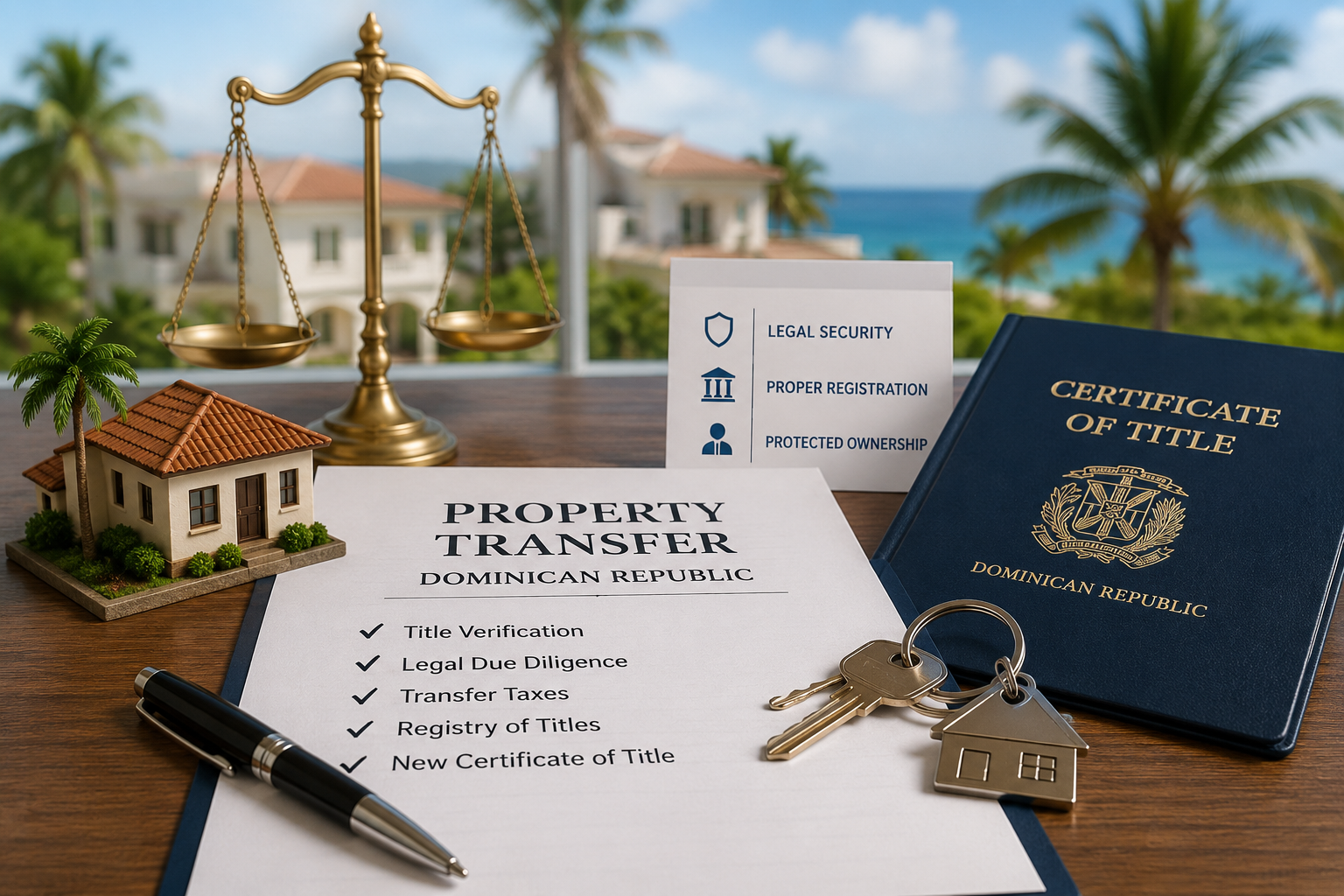
Many investors choose corporate ownership structures when acquiring:
- Vacation rental properties.
- Commercial real estate.
- Development land.
- Multiple investment properties.
- Tourism and hospitality-related projects.
Depending on the investor's objectives, corporate ownership may offer advantages related to asset protection, succession planning, business continuity, investment management, and the administration of jointly owned investment projects.
However, the suitability of a corporate ownership structure should always be evaluated based on the investor's specific legal, tax, and long-term investment goals.
Understanding Corporate Ownership
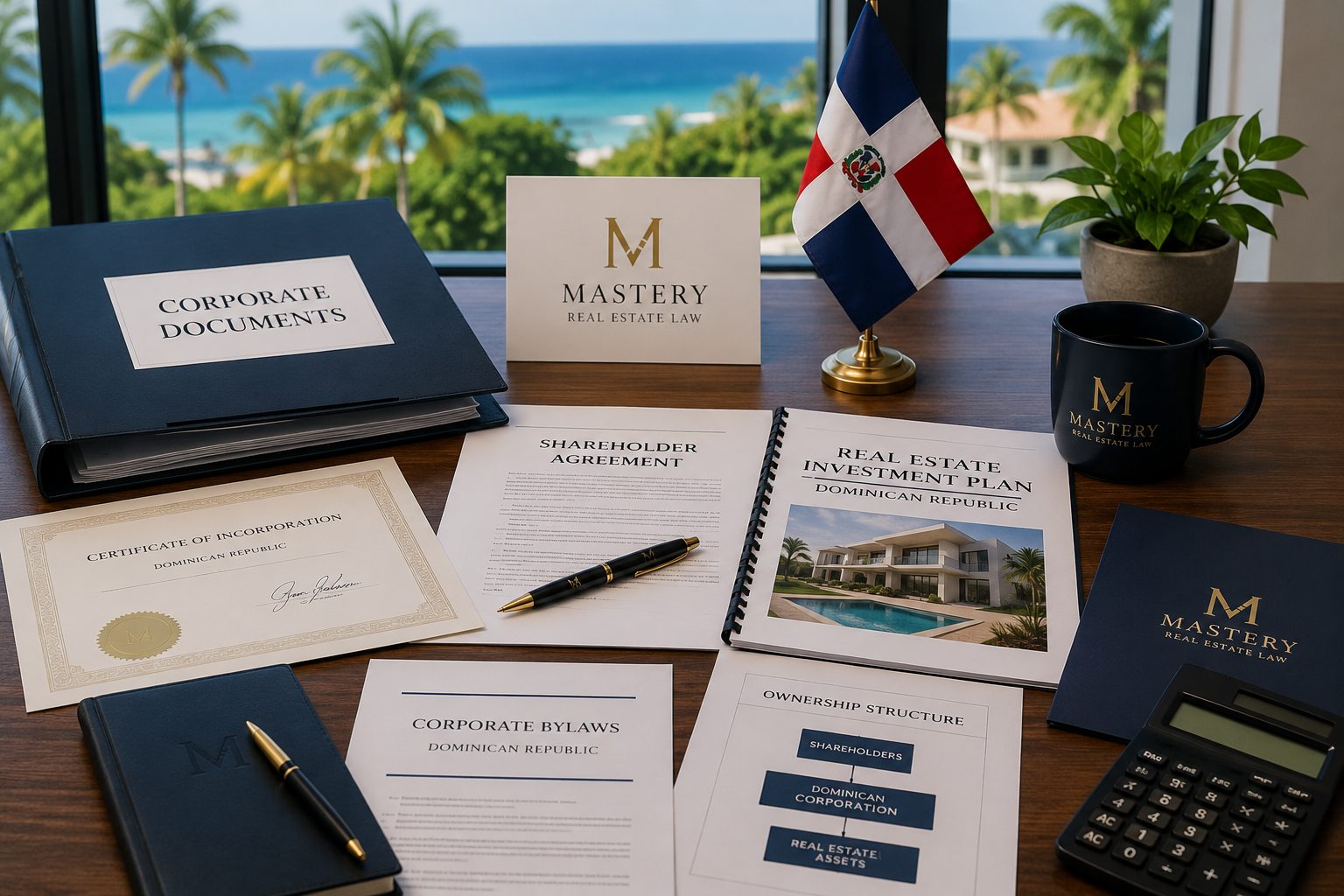
Careful Corporate Planning Can Help Investors Structure Real Estate Holdings Efficiently While Maintaining Compliance with Dominican Law.
When real estate is acquired through a Dominican corporation, the corporation becomes the legal owner of the property rather than the individual investor.
In this ownership structure, the investor owns shares or participation interests in the corporation, while the corporation itself holds title to the real estate asset.
The legal framework governing this type of ownership is primarily established by Law No. 479-08 on Commercial Companies and Individual Limited Liability Enterprises, as amended by Law No. 31-11. Under this framework, Dominican corporations may acquire, own, manage, lease, and transfer real estate assets, subject to compliance with applicable corporate, tax, and real estate regulations.
Depending on the investor's objectives, corporate ownership may provide advantages related to:
- Asset protection.
- Estate and succession planning.
- Business continuity.
- Investment management.
- Multiple-owner investment structures.
However, corporate ownership also involves ongoing legal, tax, and administrative obligations that should be carefully evaluated before acquiring property.
For this reason, investors should seek professional legal advice before deciding whether individual or corporate ownership is the most appropriate structure for their real estate investment.
Potential Advantages of Purchasing Through a Corporation
1. Asset Protection
One of the primary reasons investors choose corporate ownership is to separate personal assets from investment assets. While no ownership structure can eliminate all risks, a properly organized and maintained corporation may provide an additional layer of legal protection by separating the investor from certain liabilities associated with the property or business operations.
For investors managing rental properties, commercial assets, or multiple real estate holdings, corporate ownership may offer greater organizational and risk-management advantages.
2. Estate and Succession Planning
Corporate ownership can simplify certain succession and inheritance matters.
Instead of transferring ownership of the property itself, heirs may inherit ownership interests in the corporation.
This may help facilitate future ownership transitions depending on the family's circumstances.
3. Multiple Investors
When several investors participate in a project, corporate ownership often provides a more organized structure.
A corporation can clearly define:
- Ownership percentages.
- Voting rights.
- Management authority.
- Profit distribution.
- Exit strategies.
This can reduce future disputes among investors.
4. Business Operations
Investors operating:
- Vacation rentals,
- Property management businesses,
- Commercial properties,
- Tourism projects,
may find that corporate ownership offers greater operational flexibility.
5. Future Sale Flexibility
In some circumstances, investors may choose to transfer ownership interests in the corporation rather than transferring the property itself.
However, the legal and tax implications of this strategy should always be reviewed with professional counsel.
Potential Considerations Before Choosing Corporate Ownership
Corporate ownership is not appropriate for every investor.
Some considerations include:
Corporate Maintenance Requirements
Corporate ownership involves ongoing legal, administrative, and tax obligations that must be properly maintained to preserve the corporation's good standing and ensure compliance with Dominican law.
Pursuant to Law No. 479-08 on Commercial Companies, as amended by Law No. 31-11, corporations are generally required to maintain:
- Corporate books and records.
- Shareholder and ownership information.
- Corporate resolutions and meeting records.
- Annual corporate filings.
- Tax registration and compliance requirements.
- Updated corporate documentation.
Failure to comply with these obligations may result in administrative penalties, legal complications, difficulties in conducting transactions, and potential challenges affecting the corporation's operations and ownership structure.
For this reason, investors should ensure that their corporation remains properly maintained and compliant with all applicable legal and tax requirements.
Additional Administrative Costs
Operating a corporation may involve:
- Incorporation costs.
- Accounting expenses.
- Annual compliance costs.
- Legal advisory fees.
Investors should evaluate whether the benefits justify the additional expenses.
Tax Considerations
The tax implications of acquiring real estate through a Dominican corporation can vary significantly depending on the nature of the investment and the investor's overall objectives.
Corporate ownership should be evaluated in light of several factors, including:
- The intended use of the property.
- Rental income and revenue-generating activities.
- The corporate ownership structure.
- Future sale or transfer plans.
- Estate and succession planning considerations.
- The investor's tax residency status.
- Applicable corporate and real estate tax obligations.
In addition, corporate entities are generally subject to the provisions of the Dominican Tax Code (Law No. 11-92), together with applicable regulations and administrative requirements established by the General Directorate of Internal Taxes (DGII).
Because tax consequences can differ substantially from one investment structure to another, investors should obtain qualified legal and tax advice before deciding whether corporate ownership is the most appropriate option for their real estate investment.

Choosing the Appropriate Ownership Structure Is an Important Step in Protecting Real Estate Investments and Supporting Long-Term Financial Objectives.
When Individual Ownership May Be Preferable
Many investors successfully purchase property in their personal names.
Individual ownership may be appropriate when:
- Purchasing a primary residence.
- Acquiring a vacation home for personal use.
- Owning a single investment property.
- Seeking a simpler ownership structure.
For many buyers, individual ownership offers a straightforward and cost-effective solution.
Learn more in our guide "What Does Legal Due Diligence Include in the Dominican Republic?"
Factors Investors Should Evaluate
Before deciding between personal and corporate ownership, investors should consider:
- Investment objectives.
- Number of properties being acquired.
- Rental income expectations.
- Asset protection goals.
- Succession planning needs.
- Tax implications.
- Long-term investment strategy.
Every situation is unique, and the optimal structure depends on the investor's specific circumstances.
How Mastery Real Estate Law Can Help
At Mastery Real Estate Law, we assist investors with:
- Corporate formation.
- Real estate acquisitions.
- Title verification.
- Legal due diligence.
- Property transfers.
- Contract review.
- Foreign investor representation.
- Real estate legal consulting.
Our goal is to help clients structure their investments in a way that protects their interests and supports their long-term objectives.
Learn more in our guide "How to Verify a Property Title in the Dominican Republic."
Final Considerations
Purchasing real estate through a Dominican corporation may offer significant advantages, including enhanced asset protection, succession planning opportunities, business continuity, and greater flexibility in managing real estate investments. However, corporate ownership also entails ongoing legal, administrative, and tax compliance obligations that should be carefully considered before acquiring property.
The most appropriate ownership structure will depend on each investor's specific circumstances, investment objectives, risk tolerance, succession planning needs, and long-term financial strategy.
Investors should evaluate their options in light of applicable Dominican legislation, including Law No. 479-08 on Commercial Companies, as amended by Law No. 31-11, the Dominican Tax Code (Law No. 11-92), and relevant real estate regulations.
Before purchasing property in the Dominican Republic, obtaining qualified legal and tax advice can help ensure that the chosen ownership structure aligns with the investor's goals while minimizing potential legal and financial risks.
By selecting the appropriate structure at the outset of the investment process, investors can better protect their interests, improve operational efficiency, and maximize the long-term benefits of real estate ownership in the Dominican Republic.
Choosing the appropriate ownership structure before purchasing real estate can have long-term legal, financial, and operational implications. Careful planning and professional legal advice can help investors protect their assets, improve business continuity, and reduce unnecessary risks.
Frequently Asked Questions
Can foreigners buy property through a Dominican corporation?
Yes. Foreign investors may establish a Dominican corporation and use it to acquire, own, lease, manage, and transfer real estate, subject to applicable Dominican laws.
What are the benefits of buying property through a corporation?
Corporate ownership may provide advantages related to asset protection, business continuity, succession planning, investment management, and multiple-owner investment structures.
Does owning property through a corporation reduce taxes?
Not necessarily. Tax consequences depend on the investor's circumstances, the intended use of the property, and applicable Dominican tax laws. Professional legal and tax advice is recommended.
Is corporate ownership better than individual ownership?
There is no single answer. The appropriate ownership structure depends on the investor's objectives, number of properties, business activities, and long-term investment strategy.
Can a corporation own multiple properties?
Yes. A Dominican corporation may own one or multiple residential, commercial, or investment properties.
Should I create a corporation before buying property?
It depends on your investment goals. Investors planning to own multiple properties or operate rental businesses often benefit from evaluating corporate ownership before purchasing.
Contact Mastery Real Estate Law
Considering purchasing property through a Dominican corporation?
Our team can assist you with:
- Corporate formation.
- Legal due diligence.
- Title verification.
- Contract review.
- Property transfers.
- Foreign investor representation.
- Real estate transactions throughout the Dominican Republic.
Contact Mastery Real Estate Law today to discuss the ownership structure that best aligns with your investment objectives and long-term goals
Published by Mastery Real Estate Law
Protecting Your Investment in the Dominican Republic.