
New Property Tax Updates in the Dominican Republic (2026)
The Dominican Republic continues to attract local and international real estate investors due to its growing economy, strong tourism sector, and favorable investment environment. However, understanding property tax obligations remains an important part of owning and investing in real estate.
Property owners should stay informed about tax regulations, exemptions, and compliance requirements to avoid unexpected liabilities and ensure proper financial planning.
At Mastery Real Estate Law, we assist property owners and investors in understanding the legal and tax considerations associated with real estate ownership in the Dominican Republic.

Understanding Property Tax Obligations and Available Exemptions Can Help Real Estate Owners Make Informed Financial Decisions and Maintain Compliance with Dominican Tax Regulations.
Understanding Property Taxes in the Dominican Republic
Property taxes are an important aspect of real estate ownership. Investors should understand how taxes may affect the acquisition, ownership, and future sale of a property.
Common tax considerations include:
- Property Transfer Tax.
- Property Tax (IPI).
- Capital Gains Tax.
- Rental Income Tax.
- Corporate Tax Obligations.
Understanding these obligations can help investors make informed decisions and avoid compliance issues.
What Is the Property Transfer Tax?
When purchasing real estate in the Dominican Republic, buyers are generally required to pay a property transfer tax.
The transfer tax is typically calculated based on the value established by the tax authorities or the transaction value, depending on the circumstances of the transaction.
Investors should verify the applicable tax requirements before closing any purchase.
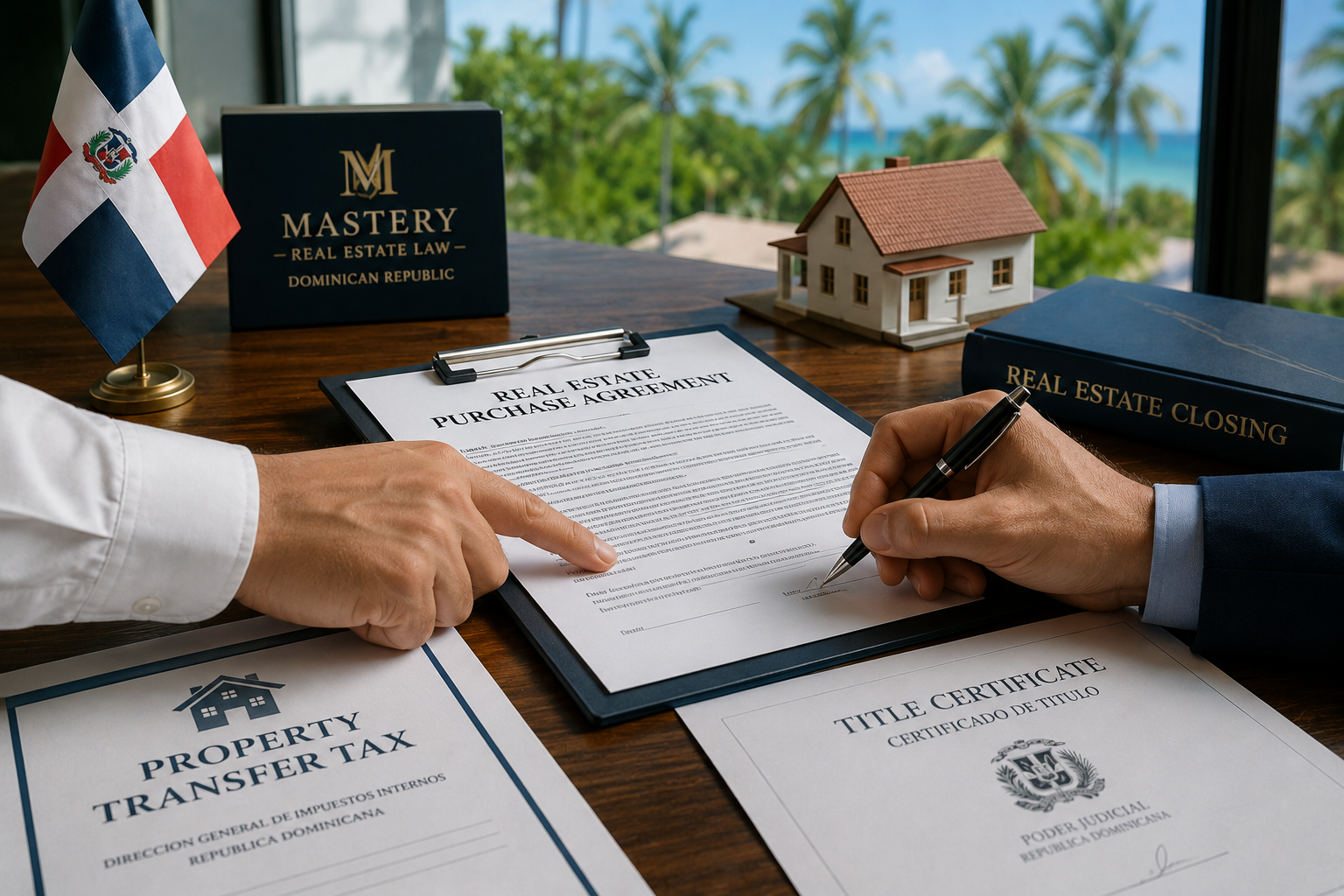
Property Transfer Taxes Are an Important Consideration in Real Estate Transactions and Should Be Evaluated Before Closing a Purchase.
Understanding the IPI Property Tax
The Dominican Republic imposes a property tax known as:
IPI (Impuesto al Patrimonio Inmobiliario)
This tax generally applies to individuals whose real estate holdings exceed certain exemption thresholds established by Dominican tax authorities.
Important factors include:
- Total assessed value of properties.
- Applicable exemptions.
- Ownership structure.
- Property classification.
Tax rules may be updated periodically, making professional advice valuable for investors.
Exemptions That May Apply
Certain properties may qualify for exemptions depending on the circumstances.
Examples may include:
- Properties below exemption thresholds.
- Certain agricultural properties.
- Specific government-authorized exemptions.
- Other situations established by applicable regulations.
Investors should obtain professional guidance to determine whether exemptions may apply to their properties.
Tax Considerations for Rental Properties
Many foreign investors purchase properties with the intention of generating rental income.
When operating vacation rentals or long-term rental properties, investors should consider:
- Rental income reporting requirements.
- Applicable tax obligations.
- Corporate ownership considerations.
- Recordkeeping requirements.
Proper planning can help investors remain compliant while maximizing the benefits of their investment.

Rental Properties Can Generate Attractive Income Opportunities, but Investors Should Understand the Tax Obligations Associated with Real Estate Ownership and Rental Activities.
Corporate Ownership and Tax Planning
Some investors choose to acquire property through a Dominican corporation.
Potential advantages may include:
- Asset protection.
- Business continuity.
- Estate planning flexibility.
- Management of multiple investment properties.
However, corporate ownership may involve additional compliance and tax responsibilities that should be reviewed before acquisition.
Why Tax Planning Matters
Property taxes can significantly affect the long-term profitability of a real estate investment.
Proper planning may help investors:
- Avoid penalties.
- Improve cash flow management.
- Identify available exemptions.
- Structure investments efficiently.
- Maintain compliance with applicable regulations.
A proactive approach can help reduce future legal and financial risks.
Working with Legal and Tax Professionals
Real estate taxation involves legal and financial considerations that may vary depending on the property's use, ownership structure, and investment goals.
Professional assistance can help investors:
- Understand tax obligations.
- Review ownership structures.
- Analyze potential exemptions.
- Ensure regulatory compliance.
- Develop long-term investment strategies.
How Mastery Real Estate Law Can Help
At Mastery Real Estate Law, we assist clients with the legal aspects of real estate ownership and investment throughout the Dominican Republic.
Our services include:
- Real Estate Legal Consulting.
- Title Verification.
- Due Diligence Investigations.
- Property Transfers.
- Foreign Investor Support.
- Real Estate Transaction Review.
Our goal is to help investors protect their assets and make informed real estate decisions.
Understanding property taxes is an essential part of successful real estate ownership in the Dominican Republic. Investors should remain informed about transfer taxes, property taxes, rental income obligations, and available exemptions.
Before purchasing property or developing an investment strategy, obtaining professional legal and tax guidance can help reduce risks and improve long-term outcomes.
Contact Mastery Real Estate Law
If you are considering purchasing property in Punta Cana, Bávaro, Cap Cana, Bayahibe, Miches, or elsewhere in the Dominican Republic, contact our team for professional legal guidance.
Published by Mastery Real Estate Law
Protecting Your Investment in the Dominican Republic.