
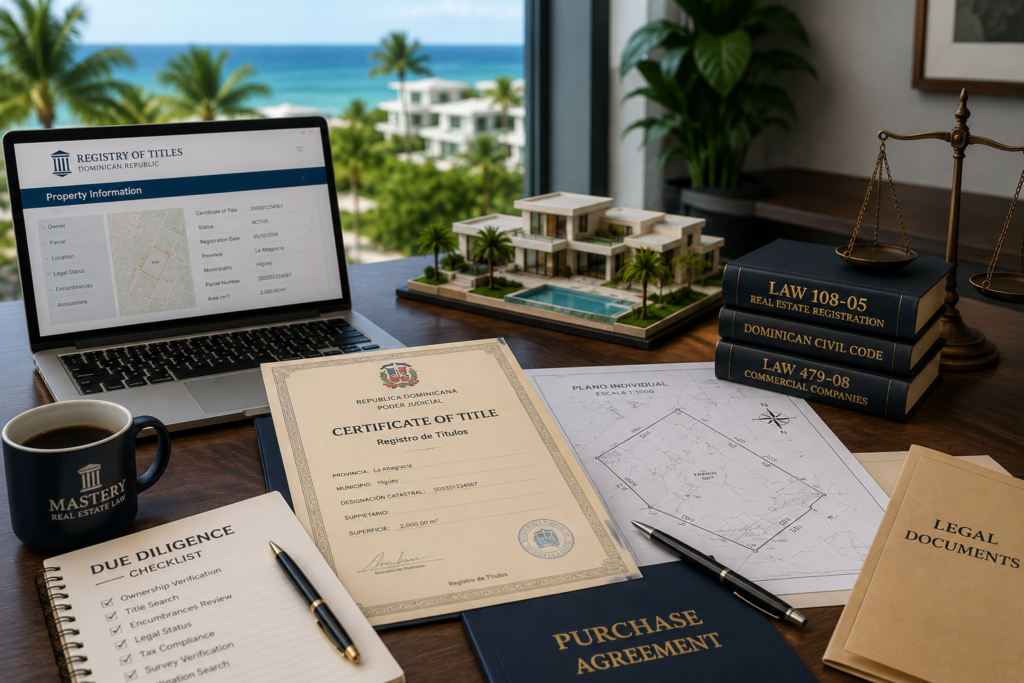
Verify Property Titles Before Purchase
The Dominican Republic has become one of the most attractive real estate investment destinations in the Caribbean. With its growing tourism sector, favorable climate, modern infrastructure, and strong demand for vacation and rental properties, foreign investors continue to purchase condominiums, villas, beachfront land, and commercial properties throughout Punta Cana, Cap Cana, Bávaro, Miches, Bayahibe, Las Terrenas, and Santo Domingo.
While the opportunities are significant, purchasing property without first verifying ownership can expose investors to serious legal and financial risks. One of the most important protections available to any buyer is a comprehensive title verification process conducted before signing a purchase agreement or transferring funds.
At Mastery Real Estate Law, we regularly assist foreign investors with title verification, legal due diligence, property transfers, and real estate acquisitions throughout the Dominican Republic. Proper title verification is often the difference between a secure investment and a costly legal dispute.
Can Foreigners Legally Own Property in the Dominican Republic?
Yes.
The Dominican Republic allows foreign individuals and foreign-owned companies to acquire and own real estate under the same conditions as Dominican citizens.
There are no restrictions preventing foreigners from purchasing:
- Residential properties
- Condominiums
- Villas
- Commercial properties
- Development land
- Beachfront properties
- Tourism-related investments
Because foreign investors enjoy equal ownership rights, Dominican law provides the same legal protections available to local buyers. However, those protections only become effective when ownership rights are properly verified and registered.
Understanding the Dominican Property Registration System
Real estate ownership in the Dominican Republic is governed primarily by Law No. 108-05 on Real Estate Registration.
Under Law 108-05, ownership rights over registered property are recognized and protected through registration within the Dominican Land Registration System.
The principal institutions involved include:
Registry of Titles (Registro de Títulos)
Responsible for maintaining ownership records and issuing Certificates of Title.
Cadastral Directorate
Responsible for property surveys, parcel identification, and cadastral information.
Superior Land Courts
Responsible for resolving disputes involving registered real estate rights.
This legal framework provides a high degree of certainty for investors, provided that proper due diligence is conducted before purchase.
Why Title Verification Is Critical for Foreign Investors
Many foreign buyers mistakenly assume that possession of a property automatically proves ownership.
In reality, the person occupying or selling a property may not always be the lawful owner.
A title verification investigation confirms:
- Who legally owns the property.
- Whether the seller has authority to transfer ownership.
- Whether ownership records are current.
- Whether third parties have rights affecting the property.
- Whether legal restrictions exist.
Without title verification, investors may unknowingly purchase a property affected by serious legal defects.
The Certificate of Title: The Most Important Document
The Certificate of Title (Certificado de Título) is the primary document proving ownership of registered real estate.
A current Certificate of Title identifies:
- The registered owner.
- Property location.
- Parcel designation.
- Cadastral information.
- Ownership rights.
- Registered encumbrances.
- Restrictions affecting the property.
Foreign investors should never rely solely on copies provided by a seller.
An attorney should obtain and review current title information directly through official sources whenever possible. To learn more about the title verification process, read our article "How to Verify a Property Title in the Dominican Republic."

Foreign investors should independently verify ownership records and legal documentation before committing to a real estate purchase in the Dominican Republic.
Common Risks Foreign Buyers Face
Fraudulent Sales
One of the most serious risks involves individuals attempting to sell property they do not legally own.
Although uncommon, fraudulent transactions can occur when buyers fail to independently verify ownership records.
Undisclosed Mortgages
A property may be subject to registered mortgages that remain attached to the title.
Without proper investigation, buyers may discover these obligations only after closing.
Judicial Liens and Court Orders
Legal claims, attachments, or judicial restrictions can affect the owner's ability to transfer the property.
These issues should be identified before any purchase is completed.
Inheritance Disputes
Many properties remain registered in the name of deceased owners.
If succession procedures have not been completed correctly, the transaction may later be challenged by heirs.
Co-Ownership Problems
Properties owned by multiple individuals may require consent from all owners before a valid sale can occur.
Failure to verify co-ownership rights can create significant legal complications.
The Importance of Legal Due Diligence
Investors can also review our Due Diligence Checklist for Buying Property in the Dominican Republic for a step-by-step guide.
Title verification is only one component of a comprehensive due diligence investigation.
A complete review should include:
Ownership Verification
Confirming that the seller is the lawful owner.
Legal Status Review
Determining whether mortgages, liens, easements, or restrictions affect the property.
Survey Verification
Confirming that cadastral records accurately reflect the property's physical boundaries.
Corporate Verification
If a company owns the property, verifying corporate authority under Law No. 479-08 on Commercial Companies.
Litigation Search
Investigating pending legal disputes involving the property or owner.
Tax Compliance Review
Verifying compliance with applicable tax obligations.
A thorough due diligence process significantly reduces investment risk.
Why Inheritance Issues Require Special Attention
Foreign investors frequently encounter properties acquired through inheritance.
Under the Dominican Civil Code, heirs acquire rights upon the death of the owner. However, ownership records often remain unchanged for years.
Before purchasing inherited property, buyers should verify:
- Completion of succession proceedings.
- Registration of heirs.
- Payment of inheritance taxes.
- Proper updating of title records.
- Authorization from all heirs.
Failure to investigate inheritance issues can result in future ownership disputes.
Verifying Corporate Ownership
Many investment properties are owned by Dominican corporations.
When purchasing property from a company, investors should confirm:
- Corporate existence.
- Commercial Registry status.
- Tax registration (RNC).
- Corporate resolutions authorizing the sale.
- Authority of company representatives.
Law No. 479-08 requires proper corporate authorization before real estate owned by a company may be transferred.
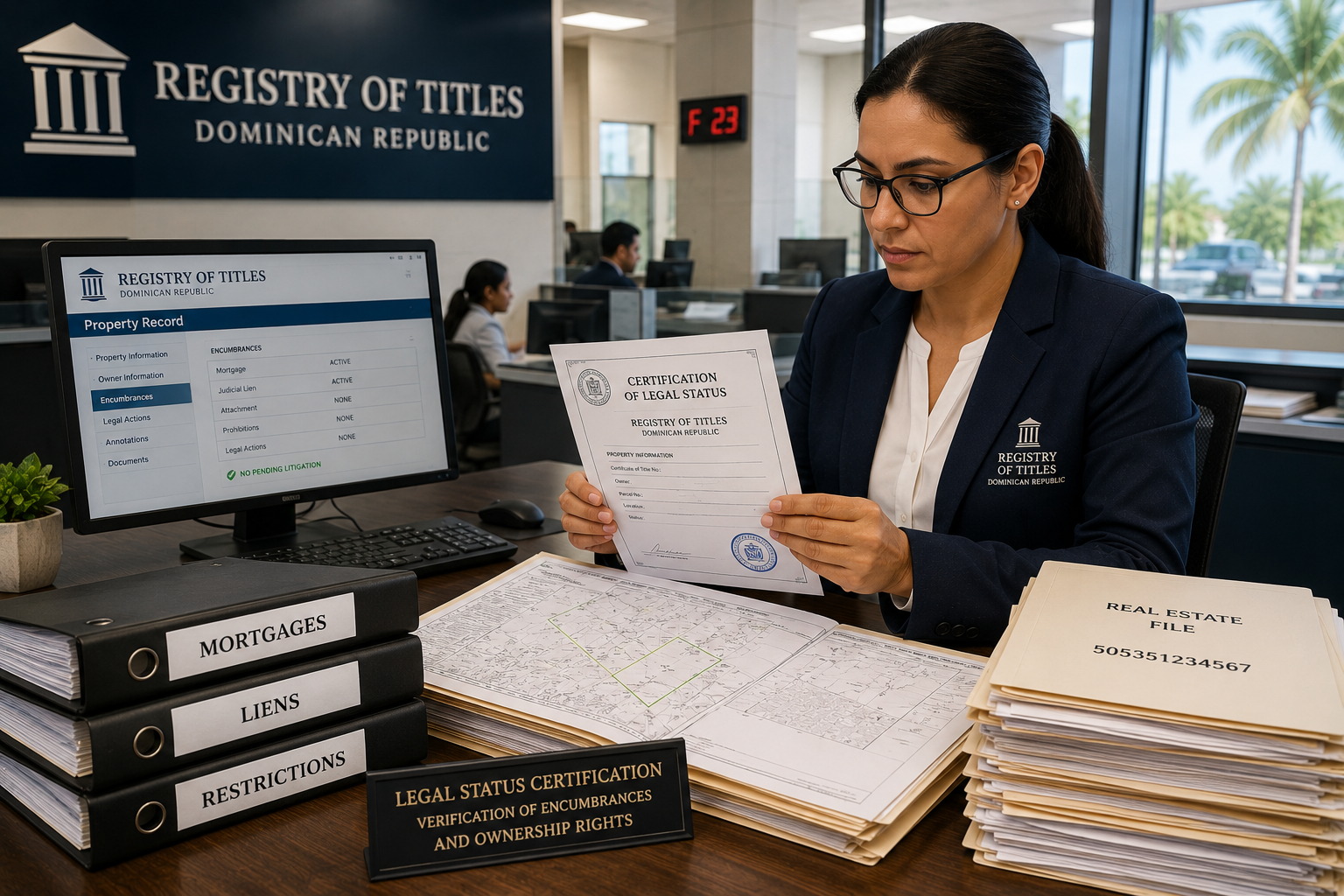
A Certification of Legal Status issued by the Registry of Titles helps investors identify mortgages, liens, encumbrances, and ownership restrictions before purchasing property in the Dominican Republic.
Understanding the Certification of Legal Status
You may also find our article How to Check for Liens and Encumbrances in the Dominican Republic helpful.
One of the most valuable documents obtained during due diligence is the Certification of Legal Status issued by the Registry of Titles.
This certification may reveal:
- Current ownership.
- Existing mortgages.
- Liens.
- Judicial restrictions.
- Encumbrances affecting the property.
Foreign investors should request this certification before committing to any transaction.
Why Buying Directly from Developers Still Requires Verification
Many investors assume that purchasing directly from a developer eliminates legal risk.
Although reputable developers generally maintain organized documentation, title verification remains essential.
Investors should verify:
- Ownership of the land being developed.
- Construction permits.
- Environmental approvals.
- Compliance with zoning regulations.
- Existing financing arrangements.
Even pre-construction purchases require legal due diligence.
The Cost of Skipping Title Verification
Attempting to save time or legal fees by skipping title verification can become extremely expensive.
Potential consequences include:
- Loss of deposits.
- Litigation expenses.
- Delayed transfers.
- Invalid purchase agreements.
- Ownership disputes.
- Difficulty reselling the property.
- Financing complications.
Compared to the value of the investment, title verification is one of the most cost-effective protections available.
How a Real Estate Attorney Protects Foreign Investors
An experienced Dominican real estate attorney can:
- Verify ownership rights.
- Review Certificates of Title.
- Obtain Certifications of Legal Status.
- Investigate encumbrances.
- Analyze succession issues.
- Verify corporate authority.
- Review contracts.
- Coordinate closing procedures.
- Ensure compliance with Dominican law.
Professional legal representation helps investors avoid risks that may not be immediately visible.
Why Punta Cana, Cap Cana, Miches, and Bayahibe Investors Should Be Especially Careful
The Eastern Region of the Dominican Republic continues to experience rapid tourism and real estate growth.
As demand increases, investors frequently encounter:
- Pre-construction developments.
- Tourism projects.
- Beachfront land acquisitions.
- Joint venture opportunities.
- Corporate-owned properties.
The higher the investment value, the more important proper title verification becomes.
Conducting legal due diligence before purchase protects investors and strengthens long-term investment security.
Final Considerations
The Dominican Republic offers outstanding opportunities for foreign real estate investors, but every investment should begin with a thorough title verification process. Ownership confirmation, legal status investigations, succession reviews, corporate verification, and compliance with Law No. 108-05 on Real Estate Registration, Law No. 479-08 on Commercial Companies, and the Dominican Civil Code are essential components of a secure transaction.
Foreign investors who verify property titles before purchase significantly reduce legal risks, protect their capital, and increase the likelihood of a successful investment.
A few days spent conducting proper due diligence can prevent years of costly litigation and uncertainty.
Need Assistance Verifying a Property Before Purchase?
If you are considering investing in Dominican real estate, you may also wish to read Can Foreigners Buy Property in the Dominican Republic?
At Mastery Real Estate Law, we assist foreign investors, buyers, developers, and property owners with title verification, due diligence investigations, purchase agreements, inheritance matters, property transfers, and all aspects of Dominican real estate law.
Contact us today to protect your investment before purchasing property in the Dominican Republic.